Voluntary vs Involuntary Muscles: Key Differences and Functions
Introduction to Muscle Types
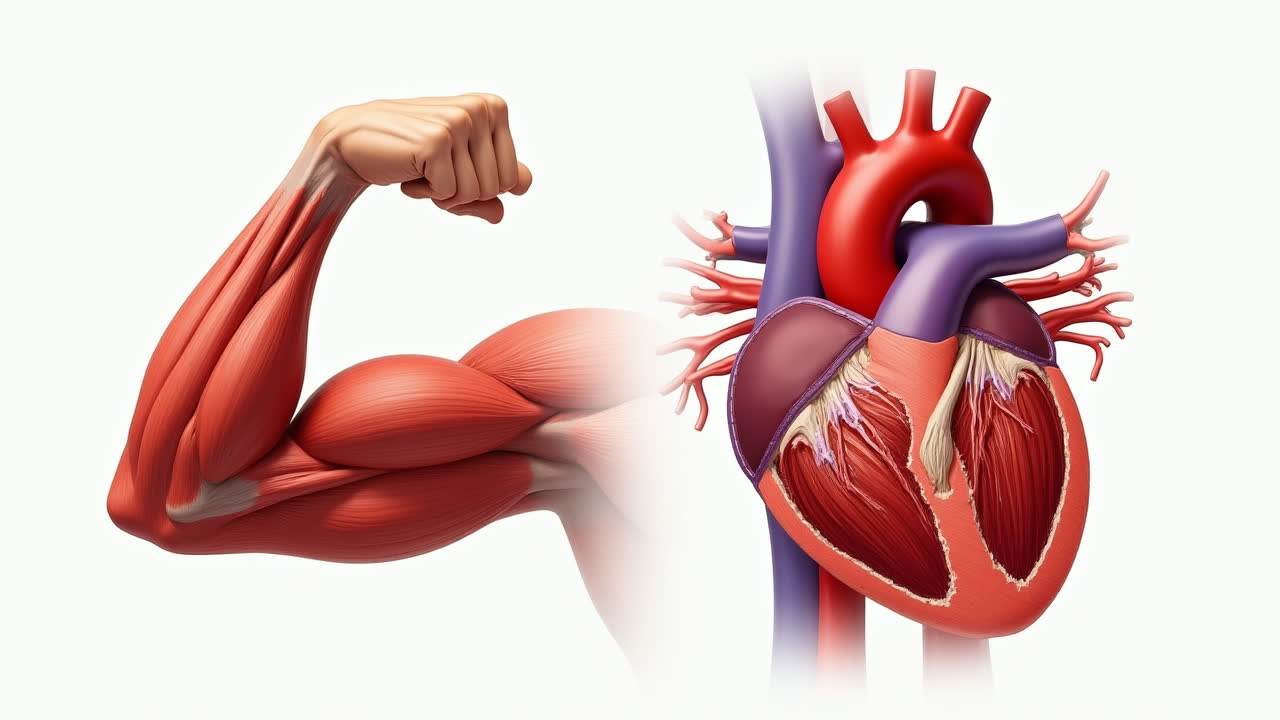
The human body is a remarkable machine powered by an intricate network of muscles that work tirelessly to keep us moving, breathing, and functioning. Have you ever wondered why you can consciously flex your bicep but can't control your heartbeat? The answer lies in the fascinating distinction between voluntary and involuntary muscles, two fundamental muscle types that serve different yet equally vital functions in our bodies.
Our bodies contain three primary types of muscles: skeletal (voluntary), smooth (involuntary), and cardiac muscles. Each of these muscle varieties has evolved specialized characteristics that make them perfectly suited for their specific roles. While we often take these muscles for granted, understanding their differences can give us incredible insight into how our bodies function.
In this comprehensive guide, we'll explore the key differences between voluntary and involuntary muscles, examining their structures, functions, and the nervous systems that control them. Whether you're a student, fitness enthusiast, or simply curious about human anatomy, this knowledge will deepen your appreciation for the incredible muscular system that powers your every move and keeps your internal processes running smoothly.
What Are Voluntary Muscles?
Voluntary muscles, also known as skeletal muscles, are the muscles you can consciously control. Think about the muscles you use when lifting weights, walking, or even smiling – these are all voluntary muscles in action. These muscles are attached to your skeleton via tendons and work in pairs to facilitate movement by contracting and relaxing in coordination.
The structure of voluntary muscles is quite distinctive. They are composed of long, cylindrical, multinucleated cells arranged in bundles. Each muscle cell (also called a muscle fiber) is wrapped with a connective tissue called endomysium. These fibers are bundled together to form fasciculi, which are wrapped in another layer of connective tissue called perimysium. Finally, multiple fasciculi are bundled together to form the complete muscle, which is encased in epimysium. This hierarchical organization provides strength and allows for precise control.
One of the most remarkable characteristics of voluntary muscles is their direct connection to the somatic nervous system. When you decide to move your arm, your brain sends signals through motor neurons to the appropriate muscles, causing them to contract. This conscious control is what defines voluntary muscles and sets them apart from their involuntary counterparts. However, this high level of control comes at a cost – voluntary muscles require significant energy to function and can fatigue, requiring periods of rest between activities.
Examples of voluntary muscles include the biceps and triceps in your arms, the quadriceps and hamstrings in your legs, and the muscles of your face that allow you to make expressions. These muscles typically produce quick, powerful contractions that enable precise movements ranging from the delicate control needed to thread a needle to the explosive power required for sprinting or jumping.
What Are Involuntary Muscles?
Involuntary muscles, commonly known as smooth muscles, operate beyond your conscious control. These muscles are found in the walls of hollow organs throughout your body, including your digestive tract, blood vessels, urinary bladder, and respiratory airways. Unlike voluntary muscles, you don't have to think about contracting these muscles – they work automatically to maintain your body's internal processes.
Structurally, involuntary muscles are quite different from their voluntary counterparts. They consist of spindle-shaped cells with a single, centrally located nucleus. These cells are smaller than skeletal muscle fibers and lack the striations (stripes) that give voluntary muscles their distinctive appearance. Smooth muscle cells are connected by gap junctions, which allow electrical signals to pass from one cell to another, enabling them to contract as a synchronized unit.
The autonomic nervous system governs involuntary muscles, with control divided between the sympathetic and parasympathetic branches. This system operates automatically, responding to internal conditions rather than conscious commands. For example, when food enters your stomach, stretch receptors trigger smooth muscle contractions to begin the digestive process – all without any conscious effort on your part.
One of the most valuable traits of involuntary muscles is their ability to maintain long-term contractions without fatigue. While voluntary muscles tire quickly during sustained activity, smooth muscles can maintain tone and continue working without rest periods. This endurance is crucial for functions like maintaining blood pressure or moving food through your digestive system – processes that must continue 24 hours a day throughout your life.
The slow, rhythmic contractions of involuntary muscles are perfectly suited for their roles in processes like peristalsis (the wave-like muscle contractions that move food through the digestive tract), regulating the diameter of blood vessels to control blood pressure, and adjusting the size of the pupils in response to light levels. These activities require sustained, measured responses rather than the quick, powerful movements characteristic of voluntary muscles.
Key Differences: Voluntary vs Involuntary Muscles
| Characteristic | Voluntary (Skeletal) Muscles | Involuntary (Smooth) Muscles |
|---|---|---|
| Control | Under conscious control | Function automatically without conscious control |
| Location | Attached to the skeleton | Found in walls of hollow organs |
| Structure | Long, cylindrical fibers | Small, spindle-shaped cells |
| Nucleus | Multinucleated (multiple nuclei) | Uninucleated (single nucleus) |
| Nervous System | Somatic nervous system | Autonomic nervous system |
| Contraction Speed | Fast contractions | Slow, sustained contractions |
| Energy Requirements | High energy demand | Lower energy demand |
| Fatigue | Fatigue quickly, need rest periods | Resistant to fatigue, can work continuously |
Functions and Importance
Functions of Voluntary Muscles
Voluntary muscles play crucial roles in our daily lives, enabling movement, posture, and physical interaction with our environment. The primary functions of voluntary muscles include:
- Movement and Locomotion: They enable all conscious movements, from walking and running to fine motor skills like writing or playing an instrument.
- Posture Maintenance: Even when you're "standing still," your voluntary muscles are actively working to maintain your posture against gravity.
- Temperature Regulation: When you shiver, your skeletal muscles are rapidly contracting to generate heat.
- Protection: They provide protection for internal organs and support the skeletal system.
- Communication: Facial expressions, gestures, and speech all depend on voluntary muscle control.
Functions of Involuntary Muscles
Involuntary muscles work behind the scenes to keep our internal systems functioning properly. Their key roles include:
- Digestion: They facilitate peristalsis, moving food through the digestive tract and controlling the release of digestive substances.
- Circulation: Blood vessel walls contain smooth muscle that contracts or relaxes to regulate blood flow and pressure.
- Respiration: Smooth muscles in the bronchi and bronchioles adjust airway diameter to regulate airflow to the lungs.
- Urination: They control the bladder and urethra, regulating the storage and release of urine.
- Vision: Pupil size is controlled by smooth muscles that adjust how much light enters the eye.
- Reproductive Functions: From childbirth contractions to the movement of gametes, involuntary muscles are essential for reproduction.
The Nervous System and Muscle Control
The remarkable distinction between voluntary and involuntary muscles extends to how they're controlled by different branches of the nervous system. This differentiation is central to understanding how our bodies coordinate various functions, both conscious and unconscious.
Voluntary muscles are innervated by the somatic nervous system, which is the part of the peripheral nervous system responsible for carrying motor and sensory information to and from the central nervous system. When you decide to move your arm, the process begins in the motor cortex of your brain. Signals travel down specific pathways through the spinal cord and ultimately reach the motor neurons that connect directly to your skeletal muscles. This direct connection allows for precise control over the timing, force, and coordination of movements.
In contrast, involuntary muscles are controlled by the autonomic nervous system, which regulates unconscious bodily functions. This system is further divided into the sympathetic ("fight or flight") and parasympathetic ("rest and digest") branches, which often work in opposition to maintain homeostasis. Unlike the one-to-one connection between neurons and skeletal muscle fibers, autonomic neurons release neurotransmitters into the vicinity of smooth muscle cells, affecting multiple cells simultaneously. This arrangement suits the gradual, coordinated contractions needed for functions like digestion or blood pressure regulation.
Interestingly, while we categorize muscles as either voluntary or involuntary, there are some fascinating exceptions and overlaps. For instance, breathing involves the diaphragm, which is a skeletal muscle, yet it functions both automatically (when you're not thinking about it) and voluntarily (when you deliberately control your breathing). Similarly, the muscles controlling your eyelids allow for both voluntary blinking and involuntary reflexive blinking when something approaches your eye.
These exceptions highlight the remarkable complexity and adaptability of our neuromuscular system. The body has evolved these specialized control mechanisms to ensure that critical functions continue automatically while still allowing conscious override when necessary. This balance between automatic and voluntary control is what enables us to focus our attention on complex tasks without having to consciously manage basic bodily functions.
Frequently Asked Questions About Voluntary and Involuntary Muscles
Can voluntary muscles ever function involuntarily?
Yes, voluntary muscles can sometimes function involuntarily. Reflexes are a perfect example of this phenomenon. When you touch something hot and immediately withdraw your hand, your skeletal muscles are responding to a reflex arc that bypasses conscious brain processing. Similarly, the involuntary jerking movements during sleep (hypnic jerks) and muscle spasms are instances where skeletal muscles contract without conscious input. Even everyday functions like maintaining posture while standing often occur without conscious thought, despite using voluntary muscles. This dual capability allows our bodies to respond rapidly to threats while still maintaining conscious control for complex movements.
Why don't involuntary muscles fatigue like voluntary muscles do?
Involuntary muscles avoid fatigue due to several important physiological differences from voluntary muscles. First, smooth muscle cells primarily use oxidative metabolism, which efficiently produces energy without generating the lactic acid that contributes to muscle fatigue. Second, smooth muscles contract more slowly and with less force than skeletal muscles, requiring less energy per contraction. Third, involuntary muscles have specialized relaxation phases built into their contraction cycles, allowing for partial recovery during ongoing activity. Finally, smooth muscle contractions are often maintained by specialized mechanisms that require minimal energy once initiated. These adaptations allow organs like the intestines and blood vessels to function continuously throughout our lives without requiring rest periods.
What happens to voluntary and involuntary muscles during sleep?
During sleep, voluntary and involuntary muscles behave quite differently. Voluntary muscles typically experience decreased tone during non-REM sleep, allowing the body to rest and recover. During REM sleep, most voluntary muscles enter a state of temporary paralysis (atonia) to prevent us from acting out our dreams, though the eyes and respiratory muscles remain active. In contrast, involuntary muscles continue their essential functions largely uninterrupted. Digestive processes, breathing, heartbeat, and other autonomic functions continue, though often at a reduced rate. This difference highlights the essential nature of involuntary muscle function, which must continue even during unconsciousness, while voluntary muscles can take advantage of this downtime for repair and recovery.
Conclusion
The distinction between voluntary and involuntary muscles represents one of the most elegant aspects of human physiology. Each muscle type has evolved specialized characteristics perfectly suited to its particular functions, creating a harmonious system that balances conscious control with automatic processes.
Voluntary muscles give us the freedom to move, express ourselves, and interact with our environment, providing the quick, powerful movements necessary for everything from athletics to artistic expression. Meanwhile, involuntary muscles work tirelessly behind the scenes, maintaining the internal processes essential for life without requiring our conscious attention.
Understanding the differences between these muscle types not only deepens our appreciation for the complexity of the human body but also has practical applications in fields ranging from medicine and physical therapy to athletic training and ergonomics. By recognizing how these different muscle systems function, we can better address issues when they arise and optimize performance in various activities.
Whether you're marveling at an Olympic athlete's display of voluntary muscle control or appreciating the involuntary muscles that have kept your heart beating since before you were born, the muscular system truly exemplifies the remarkable balance of conscious and unconscious processes that make human life possible.
References:
- http://www.ivyroses.com/HumanBody/Tissue/Tissue_Muscular-Tissue.php
- https://training.seer.cancer.gov/anatomy/muscular/structure.html
- https://www.kenhub.com/en/library/anatomy/smooth-musculature
- https://cnx.org/contents/FPtK1zmh@8.25:fEI3C8Ot@10/Preface
- https://commons.wikimedia.org/w/index.php?curid=30015037
- https://cnx.org/contents/FPtK1zmh@8.25:fEI3C8Ot@10/Preface
- https://commons.wikimedia.org/w/index.php?curid=30015050