Protein Synthesis in Prokaryotes vs Eukaryotes: 8 Critical Differences
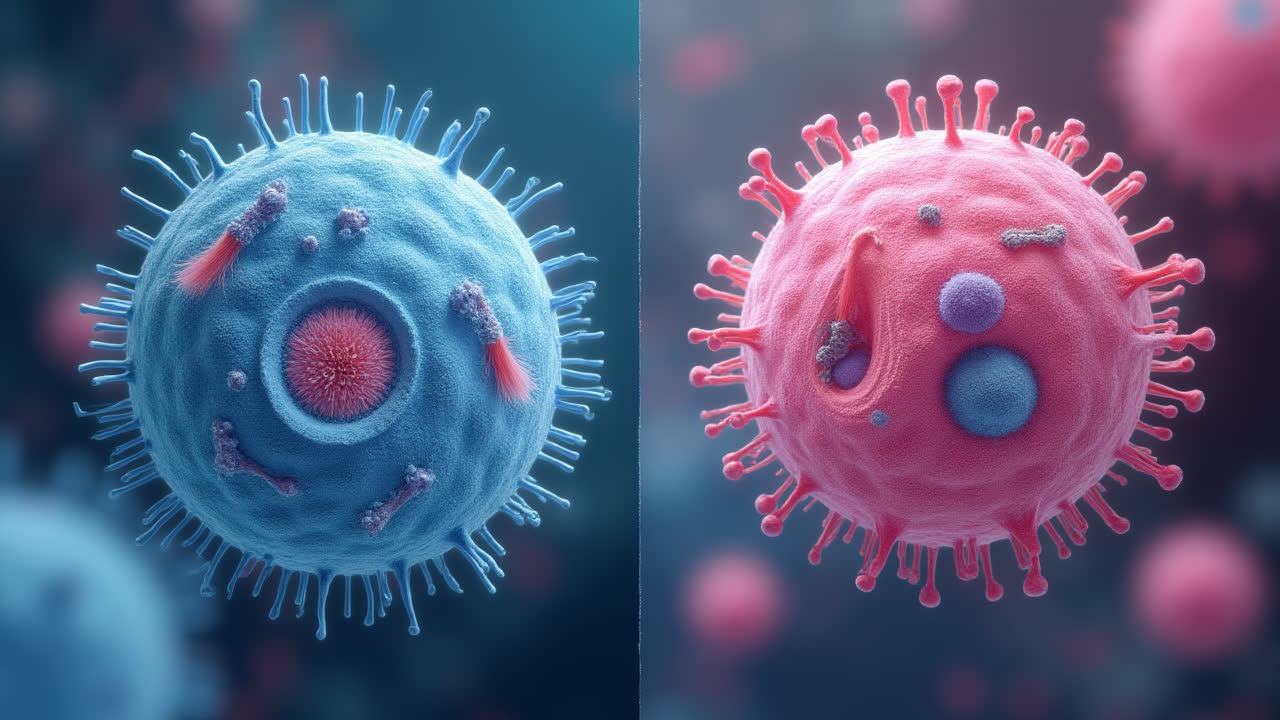
Have you ever wondered how the tiny factories inside our cells manage to create the proteins that keep us alive? It's truly fascinating how protein synthesis works across different types of organisms. The process might seem similar at first glance, but when we look closer, the differences between prokaryotes and eukaryotes become quite striking!
As a biology enthusiast, I've always been intrigued by how these cellular mechanisms evolved differently yet achieve the same fundamental purpose. In this article, we'll explore the key differences that make protein synthesis unique in each cell type. Whether you're studying for an exam or just curious about cellular biology, you'll find valuable insights here.
Understanding these differences isn't just academic trivia—it's fundamental to grasping how antibiotics work, how genetic engineering is performed, and even how certain diseases develop. Let's dive in and unravel the molecular magic of protein creation!
What is Protein Synthesis?
Before we explore the differences, let's establish what protein synthesis actually is. At its core, protein synthesis is the process by which cells build proteins according to the genetic instructions encoded in DNA. This intricate process involves multiple steps and cellular components working in harmony to create functional proteins that perform virtually all of life's essential functions.
Think of protein synthesis as following a recipe. DNA contains the master cookbook, which gets transcribed into a working copy (mRNA) that can be read by the cellular machinery. The ribosomes then translate this mRNA message into the amino acid sequence that forms the protein. It's a bit like a cook reading a recipe and then assembling the ingredients in the right order to create a dish.
The two main stages of protein synthesis are:
- Transcription - The process of creating mRNA from DNA
- Translation - The process of creating proteins from the mRNA template
Both prokaryotes (like bacteria) and eukaryotes (like humans, plants, and fungi) perform protein synthesis, but they do so with some important variations. These differences reflect their evolutionary paths and cellular complexity. I remember being surprised in my first molecular biology class when I learned just how different these processes can be between cell types that otherwise serve the same fundamental purpose!
Protein Synthesis in Prokaryotes: Key Features
Prokaryotic protein synthesis occurs in organisms like bacteria and archaea. These single-celled organisms lack a defined nucleus and have a relatively simple cellular structure. This simplicity extends to their protein synthesis process, which is streamlined for efficiency and rapid reproduction.
One striking feature of prokaryotic protein synthesis is that transcription and translation occur simultaneously in the cytoplasm. Since there's no nuclear membrane to separate these processes, the mRNA can begin being translated by ribosomes even before its transcription is complete. I've always thought of it as a production line where one end of the mRNA is still being created while the other end is already being used to make proteins—talk about efficiency!
Another distinctive characteristic is that prokaryotes often have polycistronic mRNA. This means that a single mRNA molecule can contain information for multiple proteins. These gene clusters, called operons, allow prokaryotes to regulate related genes as a unit, turning them on or off together depending on environmental conditions. The lac operon in E. coli, which controls lactose metabolism, is a classic example I studied extensively during my microbiology research.
Prokaryotic ribosomes are also different—they're smaller than their eukaryotic counterparts, with a sedimentation coefficient of 70S (composed of 30S and 50S subunits). These ribosomes bind directly to specific sequences on the mRNA called Shine-Dalgarno sequences, which help position the ribosome correctly to begin translation at the start codon.
Protein Synthesis in Eukaryotes: Key Features
Eukaryotic protein synthesis is a more complex affair, reflecting the overall increased complexity of eukaryotic cells. In organisms like humans, plants, and fungi, the presence of a nucleus and compartmentalized cellular structure creates distinct spatial and temporal separation between transcription and translation.
Unlike prokaryotes, eukaryotic transcription occurs exclusively in the nucleus, where DNA is housed. The newly synthesized pre-mRNA must undergo significant processing before it can be used for translation. This processing includes the addition of a 5' cap (a modified guanine nucleotide), a poly-A tail at the 3' end, and—perhaps most significantly—the removal of non-coding introns through splicing.
The splicing process is something I find particularly fascinating. Imagine reading a book where every chapter contains paragraphs of gibberish that need to be removed before the story makes sense—that's essentially what happens with intron removal in eukaryotes. This splicing allows for alternative processing of the same gene to produce different protein variants, greatly increasing the complexity of the eukaryotic proteome without requiring additional genes.
Only after processing is complete does the mature mRNA exit the nucleus through nuclear pores to reach the cytoplasm, where ribosomes await to translate it. Eukaryotic mRNAs are typically monocistronic, meaning each mRNA molecule contains information for just one protein—quite different from the polycistronic approach of prokaryotes.
Eukaryotic ribosomes are larger than their prokaryotic counterparts, with a sedimentation coefficient of 80S (composed of 40S and 60S subunits). The initiation of translation is more complex in eukaryotes and typically involves scanning for the first AUG start codon rather than binding to a specific sequence as in prokaryotes.
Comprehensive Comparison: Prokaryotic vs Eukaryotic Protein Synthesis
Let's break down the key differences between protein synthesis in these two cell types with a detailed comparison table:
| Feature | Prokaryotic Protein Synthesis | Eukaryotic Protein Synthesis |
|---|---|---|
| mRNA Type | Polycistronic (multiple proteins from one mRNA) | Monocistronic (one protein per mRNA) |
| Process Coupling | Transcription and translation are coupled (occur simultaneously) | Transcription and translation are separated (by nuclear membrane) |
| Ribosome Type | 70S ribosomes (30S + 50S subunits) | 80S ribosomes (40S + 60S subunits) |
| mRNA Processing | Minimal or no processing | Extensive processing (capping, polyadenylation, splicing) |
| Translation Initiation | Requires Shine-Dalgarno sequence for ribosome binding | Scanning mechanism to find first AUG start codon |
| First Amino Acid | Formylmethionine (fMet) | Methionine (Met) |
| Polyribosome Structure | Linear arrangement | Circular arrangement |
| Location | Cytoplasm for both transcription and translation | Nucleus for transcription, cytoplasm for translation |
Similarities Between Prokaryotic and Eukaryotic Protein Synthesis
Despite their differences, protein synthesis in prokaryotes and eukaryotes shares several fundamental similarities. After all, both systems evolved from common ancestral mechanisms and serve the same ultimate purpose: converting genetic information into functional proteins.
Both prokaryotic and eukaryotic protein synthesis follow the same basic dogma of molecular biology: DNA → RNA → Protein. Both use the processes of transcription and translation, and both rely on similar molecular machinery, including RNA polymerases for transcription and ribosomes for translation.
The genetic code is largely universal across all life forms, with the same triplet codons specifying the same amino acids in both prokaryotes and eukaryotes. This universality is what allows scientists to express eukaryotic genes in prokaryotic systems (like producing human insulin in bacteria)—a technique I've personally used in laboratory research.
The mechanics of peptide bond formation during translation are remarkably similar across all domains of life. In both cases, the ribosome catalyzes the formation of these bonds between amino acids, following the instructions provided by the mRNA sequence. Both systems also use tRNA molecules as adapters that recognize specific codons and carry the corresponding amino acids.
It's worth noting that these similarities actually tell us a lot about evolution—they suggest that protein synthesis is an ancient and fundamental process that was already established before the divergence of prokaryotes and eukaryotes, estimated to have occurred over 2 billion years ago!
The Evolutionary Significance of Differences
Why did these differences in protein synthesis evolve in the first place? The answer lies in the different ecological niches and evolutionary pressures faced by prokaryotes and eukaryotes.
Prokaryotes, like bacteria, typically need to respond rapidly to environmental changes. Their coupled transcription-translation mechanism and polycistronic mRNAs allow for quick protein production in response to environmental stimuli. When I worked with bacterial cultures, I was always amazed at how quickly they could adapt to new conditions—sometimes showing altered protein expression within minutes!
Eukaryotes, on the other hand, tend to prioritize precision and regulatory complexity over raw speed. The nuclear membrane creates a physical separation that allows for quality control of mRNA before translation begins. The extensive processing of eukaryotic mRNA, particularly splicing, enables alternative processing of the same gene to produce different proteins—a form of "molecular multitasking" that increases proteomic complexity without requiring additional genes.
The larger ribosomal subunits in eukaryotes accommodate the more complex translation machinery, including additional factors for initiation, elongation, and termination. These added layers of complexity allow for more sophisticated regulation of protein synthesis, which is necessary for the development and maintenance of multicellular organisms with specialized cell types.
It's fascinating to consider that antibiotics like tetracycline and chloramphenicol work by targeting specifically prokaryotic ribosomes, taking advantage of these evolutionary differences to kill bacterial cells while leaving human cells unharmed. This structural difference between prokaryotic and eukaryotic ribosomes is a medical blessing that has saved countless lives!
Practical Applications of Understanding Protein Synthesis Differences
Understanding the differences between prokaryotic and eukaryotic protein synthesis has numerous practical applications in biotechnology, medicine, and basic research.
In pharmaceutical development, these differences are exploited to create antibiotics that selectively target bacterial protein synthesis without affecting human cells. Drugs like macrolides, aminoglycosides, and tetracyclines all work by binding to specific sites on prokaryotic ribosomes, interfering with bacterial protein synthesis while leaving eukaryotic protein synthesis intact.
In biotechnology, researchers often use prokaryotic systems like E. coli to produce eukaryotic proteins because prokaryotic protein synthesis is faster and simpler to manipulate. However, this approach has limitations—many eukaryotic proteins require post-translational modifications that prokaryotic systems can't perform. I remember working on a project where we had to switch from bacterial to yeast expression systems because our protein wasn't folding correctly in E. coli.
The differences also help us understand certain disease mechanisms. For instance, some antibiotics can cause side effects in humans because mitochondrial ribosomes (which evolved from bacterial ancestors) resemble prokaryotic ribosomes more than eukaryotic ones. This is why certain antibiotics can cause mitochondrial toxicity in human cells—a connection I found fascinating when studying pharmacology.
In genetic engineering, understanding the regulatory elements specific to each system is crucial for successful gene expression. When designing a gene construct for expression in a particular organism, researchers must include the appropriate promoters, terminators, and other regulatory sequences specific to that organism's protein synthesis machinery.
Conclusion
The differences between protein synthesis in prokaryotes and eukaryotes reflect the divergent evolutionary paths these cell types have taken over billions of years. While the fundamental goal—translating genetic information into functional proteins—remains the same, the mechanisms have been refined and adapted to suit the specific needs and complexities of each cell type.
From the polycistronic mRNAs and coupled transcription-translation of prokaryotes to the extensive mRNA processing and compartmentalized approach of eukaryotes, these differences highlight the incredible diversity of life's molecular machinery. Understanding these differences not only deepens our appreciation of cellular biology but also enables practical applications in medicine, biotechnology, and research.
The next time you take an antibiotic or use insulin produced by genetically engineered bacteria, remember that these technologies are possible because scientists have unraveled and leveraged the differences in protein synthesis between prokaryotes and eukaryotes. It's a powerful reminder of how basic biological knowledge can translate into real-world solutions that improve human lives.
Frequently Asked Questions
Why is prokaryotic protein synthesis generally faster than eukaryotic protein synthesis?
Prokaryotic protein synthesis is faster primarily because transcription and translation occur simultaneously in the same cellular compartment. While the mRNA is still being transcribed from DNA, ribosomes can already begin translating the 5' end of the mRNA into protein. Additionally, prokaryotic mRNA requires minimal or no processing before translation, unlike eukaryotic mRNA which undergoes extensive processing including capping, polyadenylation, and splicing. Finally, prokaryotes often use polycistronic mRNAs, allowing them to produce multiple related proteins from a single transcript, which is more efficient than the monocistronic approach of eukaryotes.
How do antibiotics target protein synthesis in bacteria without affecting human cells?
Antibiotics can selectively target bacterial protein synthesis because of the structural and functional differences between prokaryotic and eukaryotic ribosomes. Prokaryotic ribosomes are 70S (composed of 30S and 50S subunits), while eukaryotic ribosomes are 80S (composed of 40S and 60S subunits). Many antibiotics, such as aminoglycosides, tetracyclines, macrolides, and chloramphenicol, bind specifically to components of the 30S or 50S subunits of prokaryotic ribosomes, inhibiting various stages of protein synthesis. These antibiotics have much lower affinity for eukaryotic ribosomes due to structural differences, allowing them to disrupt bacterial protein synthesis while leaving human protein synthesis relatively unaffected. However, since mitochondrial ribosomes in human cells evolved from bacterial ancestors and share similarities with prokaryotic ribosomes, some antibiotics can cause side effects by affecting mitochondrial protein synthesis.
What advantages does mRNA processing in eukaryotes provide despite being more energy-intensive?
Though more energy-intensive, eukaryotic mRNA processing provides several evolutionary advantages. First, the addition of a 5' cap and poly-A tail protects the mRNA from degradation, increasing its stability and lifespan. This allows eukaryotic cells to produce proteins over a longer period from a single mRNA molecule. Second, intron splicing enables alternative splicing, where different exons from the same gene can be combined in various ways to produce multiple protein isoforms from a single gene. This dramatically increases the diversity of the proteome without requiring additional genes. Third, the nuclear processing provides an additional layer of quality control, ensuring that defective mRNAs are not translated into potentially harmful proteins. Finally, these processing steps provide additional points for regulating gene expression, allowing eukaryotic cells to fine-tune their protein production in response to developmental cues or environmental changes, which is especially important for the complex coordination required in multicellular organisms.