Primates vs Humans: 8 Key Differences You Should Know
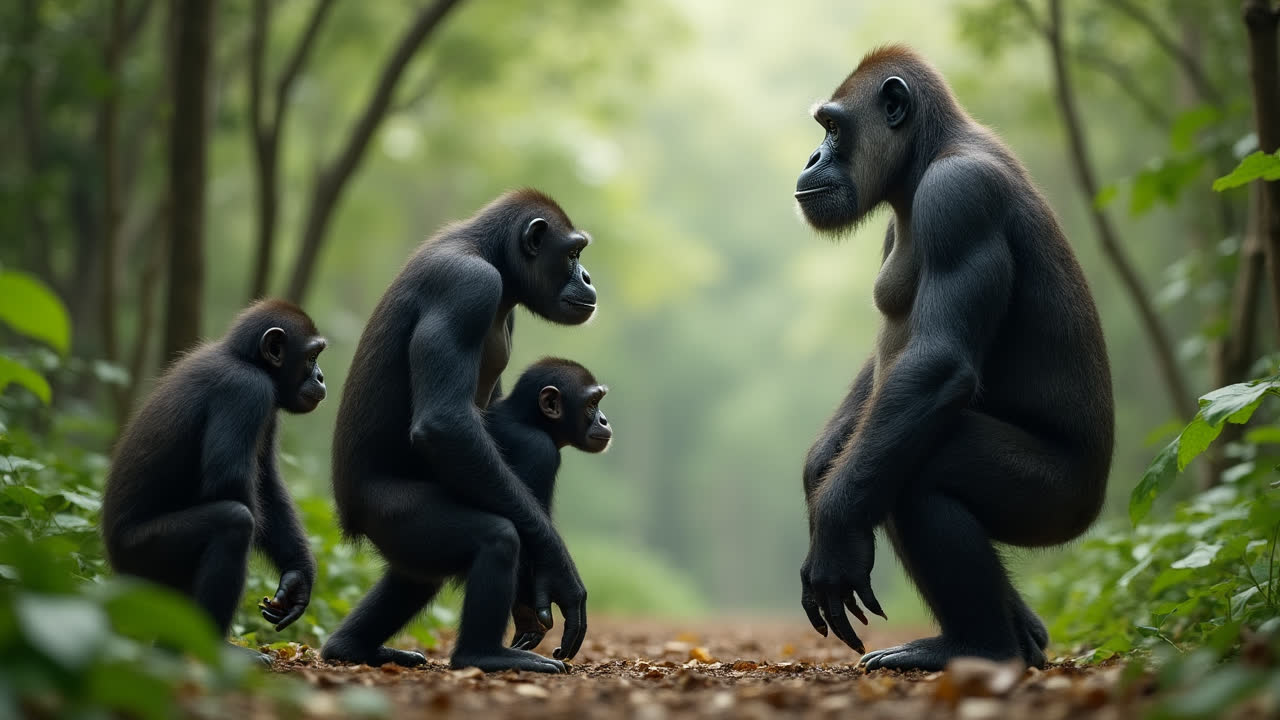
When discussing the animal kingdom, one topic that often sparks curiosity is the relationship between primates and humans. While many people understand that humans are technically primates, the distinctive features that set us apart from our evolutionary cousins remain fascinating. This article explores the key differences between primates as a broader group and humans as a specific species within that classification.
The world of primates is incredibly diverse, encompassing everything from tiny mouse lemurs to massive gorillas and, yes, us humans. I've always been captivated by how closely related we are to these creatures, yet how dramatically different our lives and capabilities have become. Let's dive into what makes primates unique as a group, and then explore what makes humans stand out even among our primate relatives.
Understanding Primates: Classification and Characteristics
Primates represent one of the most diverse orders within the class Mammalia. They emerged approximately 85-55 million years ago from small terrestrial mammals that gradually adapted to living in tropical forest environments. This adaptation led to several distinctive features that characterize the primate order today.
The primate order is divided into two main suborders: Strepsirrhini (primitive primates) and Haplorhini (advanced primates). Strepsirrhines include lemurs, galagos, and lorisids, while haplorhines encompass tarsiers, monkeys, apes, and humans. This classification helps scientists understand evolutionary relationships and shared characteristics among different primate species.
What makes an animal a primate? Several key characteristics define this diverse group. Primates typically possess relatively complex brains compared to other mammals of similar size. They have forward-facing eyes with overlapping fields of vision, which allows for excellent depth perception—a crucial adaptation for navigating through trees. Additionally, primates have grasping hands with opposable thumbs, flat nails instead of claws, sensitive fingertips, well-developed collarbones, and a longer childhood period compared to other mammals.
The primate brain deserves special attention. While all mammals have relatively large brains for their body size, primates take this to another level. The neocortex—the part of the brain associated with higher cognitive functions—is especially developed in primates. This neural enhancement supports complex social behaviors, problem-solving abilities, and advanced communication systems seen throughout the order.
Humans: A Unique Species of Primates
Humans (Homo sapiens) emerged much more recently than the primate order as a whole, appearing approximately 300,000 years ago in Africa. We belong to the tribe Hominini under the subfamily Homininae, which places us within the great ape family (Hominidae) alongside chimpanzees, bonobos, gorillas, and orangutans.
What truly sets humans apart from other primates? The most obvious distinction is our bipedalism—the ability to walk upright on two legs as our primary form of locomotion. While some other primates can walk bipedally for short periods, only humans have evolved the skeletal and muscular adaptations for efficient, sustained bipedal movement. This adaptation freed our hands for tool use and carrying, which proved to be a significant evolutionary advantage.
The human brain represents another dramatic departure from the primate norm. Although all primates have relatively large brains, the human brain is exceptional even within this context. Our brains are approximately three times larger than would be expected for a primate of our body size. This enhanced neural capacity supports our unparalleled cognitive abilities, including abstract thinking, complex language, imagination, and cultural development.
Language capability represents yet another distinctive human trait. While many primates communicate through vocalizations, facial expressions, and gestures, human language involves complex grammar, syntax, and the ability to discuss abstract concepts and hypothetical scenarios. This linguistic complexity has enabled humans to transmit knowledge across generations and coordinate complex social activities, contributing significantly to our species' success.
Key Differences Between Primates and Humans
| Characteristic | Primates (General) | Humans (Specific) |
|---|---|---|
| Timeline of Emergence | 85-55 million years ago | Approximately 300,000 years ago |
| Locomotion | Mostly quadrupedal or arboreal | Obligate bipedalism |
| Brain Size | Relatively large for body size | Exceptionally large (3x larger than expected) |
| Communication | Vocalizations, gestures, facial expressions | Complex language with grammar and abstract concepts |
| Tool Use | Simple, limited tool use in some species | Complex tool creation and cumulative technology |
| Culture | Basic cultural transmission in some species | Complex, diverse cultures with symbolic elements |
| Hair/Fur Coverage | Full body hair/fur | Reduced body hair with regional variations |
| Social Structures | Various group structures based on species | Complex, multi-level societies with institutions |
Evolutionary Advantages of Human Adaptations
The unique adaptations that distinguish humans from other primates didn't develop by chance—they provided specific evolutionary advantages that helped our ancestors survive and thrive. Bipedalism, for instance, offered several benefits. It allowed early humans to see over tall grasses in savanna environments, spot predators or prey from a distance, and travel more efficiently over long distances. Additionally, it freed the hands for carrying food, tools, or infants, which proved crucial for our species' development.
Our exceptionally large brains and cognitive abilities came with both costs and benefits. The energy demands of maintaining a large brain are substantial, requiring a nutrient-rich diet. However, the advantages outweighed these costs as enhanced cognition allowed humans to solve complex problems, anticipate future needs, and ultimately develop technologies that dramatically expanded our ecological niche. From fashioning simple stone tools to creating sophisticated digital technologies, our cognitive abilities have transformed how we interact with our environment.
I've often wondered how different our world would be if other primates had developed similar cognitive adaptations. Would chimpanzees have built cities if given a few more million years of evolution? It's fascinating to consider these alternative evolutionary paths, though we'll never know for sure. What we do know is that the combination of adaptations unique to humans created a powerful synergy that led to our current dominant position in the global ecosystem.
Language represents another critical adaptation that accelerated human evolution. By enabling precise communication of complex ideas, language facilitated cooperation at unprecedented scales. Early humans could coordinate hunting strategies, share information about food sources, and transmit accumulated knowledge across generations. This cultural transmission of information allowed innovations to spread and build upon one another, creating a positive feedback loop that propelled human development at a rate far exceeding biological evolution.
Similarities: Our Shared Primate Heritage
Despite the significant differences that set humans apart, we retain numerous features that reveal our primate heritage. Our hands, with their opposable thumbs and precise grasping abilities, connect us directly to our arboreal ancestors who needed to navigate through branches. This same manual dexterity that allowed other primates to manipulate food items now enables humans to perform surgery or create intricate artwork.
Our vision systems also reflect our primate origins. Like other primates, humans have forward-facing eyes that provide stereoscopic vision, allowing precise depth perception. We also share color vision with many other primates—an adaptation that likely evolved to help identify ripe fruits among green foliage. These visual capabilities, originally adaptations for life in the trees, now serve us in countless ways from driving vehicles to appreciating art.
Social structures represent another area of continuity between humans and other primates. Most primates are highly social animals, living in groups with complex relationships and hierarchies. Humans have expanded upon this foundation, creating increasingly complex social structures, but the basic need for social connection remains deeply embedded in our psychology. Many of our social behaviors, from grooming (now largely expressed as conversation) to alliance formation, have clear parallels in other primate species.
The similarities between human and non-human primate cognition are particularly fascinating. Studies have demonstrated that great apes possess many cognitive abilities once thought unique to humans, including self-awareness, basic understanding of others' mental states, and rudimentary culture. These findings suggest that rather than representing a completely new type of mind, human cognition evolved as an elaboration of cognitive capacities already present in our primate ancestors.
Frequently Asked Questions About Primates and Humans
Are humans considered primates in scientific classification?
Yes, humans (Homo sapiens) are classified as primates in scientific taxonomy. Specifically, we belong to the order Primates, family Hominidae (great apes), genus Homo. This classification reflects our evolutionary relationship with other primates like chimpanzees, gorillas, and orangutans. The classification is based on numerous shared anatomical features, genetic similarities, and common evolutionary origins. Despite our unique characteristics, humans remain firmly within the primate order from a biological perspective.
What makes human brains different from other primate brains?
Human brains differ from other primate brains in several key ways. First, human brains are significantly larger relative to body size—approximately three times larger than would be expected for a primate of comparable body mass. The neocortex (responsible for higher cognitive functions) is particularly expanded in humans. Additionally, humans have more neurons in the prefrontal cortex, the area associated with planning, decision-making, and social behavior. We also have enhanced connectivity between brain regions, especially in areas related to language processing. These differences support uniquely human capabilities like abstract reasoning, complex language, imagination, and cultural development.
Why did humans evolve bipedalism when other primates did not?
Humans evolved obligate bipedalism (walking exclusively on two legs) due to specific environmental pressures and advantages this locomotion style offered in our ancestral habitats. Several theories explain this evolution: the savanna hypothesis suggests that as forests receded and grasslands expanded in East Africa, upright walking allowed our ancestors to see over tall grass and travel efficiently in open environments. Bipedalism also freed the hands for carrying food, tools, or infants, providing a survival advantage. Additionally, standing upright may have helped with thermoregulation by reducing sun exposure. Other primates faced different environmental pressures and retained their quadrupedal or arboreal locomotion styles because those were more advantageous in their respective habitats, particularly forest environments where climbing remains essential.
Conclusion: Understanding Our Place in the Primate Order
The relationship between primates and humans offers a fascinating window into our evolutionary past and helps explain many aspects of our biology and behavior. While humans possess several distinctive adaptations—particularly bipedalism, exceptionally large brains, and complex language—we remain fundamentally connected to our primate relatives through countless shared features and a common evolutionary history.
Understanding these connections and distinctions enriches our appreciation of human uniqueness while simultaneously highlighting our place within the broader web of life. By recognizing both what makes us exceptional and what connects us to other primates, we gain valuable perspective on what it means to be human.
As we continue to study our primate relatives, we not only learn more about our evolutionary past but also gain insights that may help us better understand ourselves—from the biological underpinnings of our social behaviors to the neural foundations of our cognitive abilities. The story of primates and humans is still being written, both through ongoing evolution and through the scientific discoveries that illuminate our shared journey.