pH vs pOH: Understanding Crucial Differences in Measuring Solution Chemistry
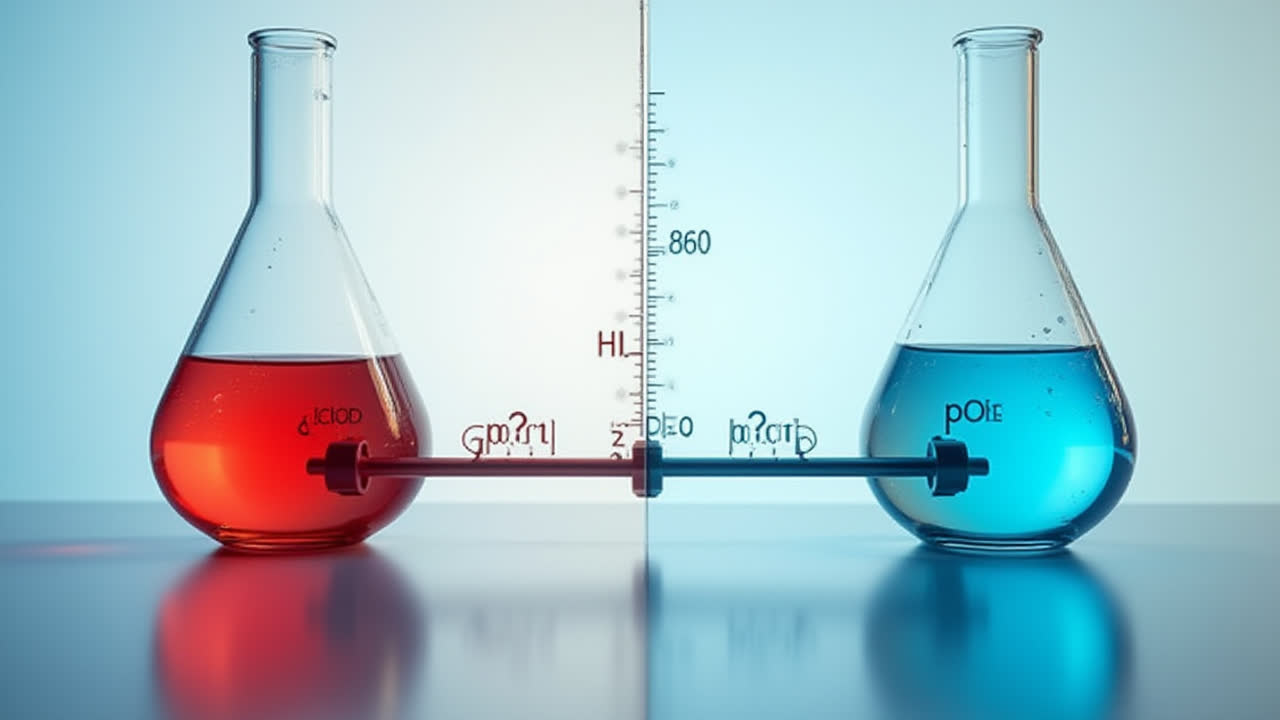
pH vs pOH: Understanding the Key Differences and Applications
When studying chemistry, particularly acid-base chemistry, you'll inevitably encounter the terms pH and pOH. These two measurements are fundamental to understanding solution chemistry, but what exactly do they mean, and how do they differ? In this comprehensive guide, we'll explore the critical differences between pH and pOH, their calculations, and their practical applications in various fields.
Chemistry students often focus heavily on pH while giving less attention to pOH. However, both measurements provide valuable information about a solution's properties. Whether you're a student, scientist, or simply curious about chemistry, understanding these concepts will deepen your knowledge of acid-base equilibria and chemical reactions.
What is pH? Understanding the Basics
pH is a measurement that quantifies the concentration of hydrogen ions (H⁺) in a solution. These hydrogen ions are responsible for the characteristic properties of acidic solutions, such as sour taste, the ability to react with metals, and the ability to turn blue litmus paper red. The term "pH" stands for "potential of hydrogen" and was introduced by Danish biochemist Søren Peter Lauritz Sørensen in 1909.
The pH scale is logarithmic, typically ranging from 0 to 14, although it can extend beyond these limits in extreme cases. This means that each whole number change represents a tenfold difference in acidity or alkalinity. For example, a solution with a pH of 3 is ten times more acidic than one with a pH of 4, and a hundred times more acidic than one with a pH of 5.
Mathematically, pH is calculated using the negative logarithm (base 10) of the hydrogen ion concentration:
pH = -log[H⁺]
Where [H⁺] represents the molar concentration of hydrogen ions in the solution.
On the pH scale, solutions are categorized into three main regions:
- Acidic: pH values below 7 (higher concentration of H⁺ ions)
- Neutral: pH value of exactly 7 (equal concentrations of H⁺ and OH⁻ ions)
- Basic (Alkaline): pH values above 7 (lower concentration of H⁺ ions)
In our daily lives, we encounter substances with various pH values. For instance, lemon juice has a pH of about 2-3, pure water has a pH of 7, and household ammonia has a pH around 11-12. In biological systems, pH regulation is critical – human blood typically maintains a slightly alkaline pH between 7.35 and 7.45, with values outside this narrow range potentially causing serious health issues.
What is pOH? The Other Side of the Equation
While pH measures hydrogen ion concentration, pOH measures the concentration of hydroxide ions (OH⁻) in a solution. Hydroxide ions are responsible for the characteristic properties of basic or alkaline solutions, such as bitter taste, slippery feel, and the ability to turn red litmus paper blue.
Just like pH, pOH is calculated using a logarithmic formula:
pOH = -log[OH⁻]
Where [OH⁻] represents the molar concentration of hydroxide ions in the solution.
The pOH scale also typically ranges from 0 to 14, but with an inverse relationship to alkalinity compared to the pH scale. A solution with a low pOH value (0-6) indicates high alkalinity (high concentration of OH⁻ ions), while a high pOH value (8-14) indicates low alkalinity or high acidity (low concentration of OH⁻ ions). A neutral solution has a pOH of 7 at standard conditions (25°C).
Have you ever wondered why some cleaning products work better than others? Many household cleaners are alkaline (low pOH) because hydroxide ions are effective at breaking down organic compounds like grease and oils. This is why substances like baking soda (sodium bicarbonate) and ammonia make excellent cleaning agents.
In chemistry laboratories and industrial processes, pOH measurements help scientists optimize conditions for reactions involving bases. Understanding the pOH of a solution allows chemists to predict reaction outcomes and design more efficient processes.
The Relationship Between pH and pOH
pH and pOH are interconnected through what chemists call the "ion product of water" (Kw). At 25°C (standard conditions), pure water undergoes self-ionization to a small extent, producing equal amounts of H⁺ and OH⁻ ions:
H₂O ⇌ H⁺ + OH⁻
Kw = [H⁺] × [OH⁻] = 1.0 × 10⁻¹⁴ (at 25°C)
This equilibrium constant (Kw) is a fundamental property of water that leads to the complementary relationship between pH and pOH. Taking the negative logarithm of both sides of the Kw equation:
-log(Kw) = -log([H⁺] × [OH⁻])
-log(10⁻¹⁴) = -log[H⁺] + (-log[OH⁻])
14 = pH + pOH
This elegant equation, pH + pOH = 14 (at 25°C), is one of the most important relationships in acid-base chemistry. It means that in any aqueous solution at standard temperature, if you know the pH, you can immediately calculate the pOH, and vice versa.
For example, if a solution has a pH of 4 (acidic), its pOH must be 10. Similarly, if a solution has a pOH of 3 (basic), its pH must be 11. In pure water, where pH = 7, the pOH is also 7, reflecting the equal concentrations of H⁺ and OH⁻ ions.
This relationship makes sense intuitively: as a solution becomes more acidic (lower pH), it must become less basic (higher pOH), and vice versa. The sum always equals 14 at standard temperature, though this value will change slightly at different temperatures due to changes in the ion product of water.
Comprehensive Comparison: pH vs pOH
| Characteristic | pH | pOH |
|---|---|---|
| Definition | Measures hydrogen ion (H⁺) concentration | Measures hydroxide ion (OH⁻) concentration |
| Formula | pH = -log[H⁺] | pOH = -log[OH⁻] |
| Scale Range | Typically 0-14 (can extend beyond in extreme cases) | Typically 0-14 (can extend beyond in extreme cases) |
| Low Values Indicate | High acidity | High alkalinity |
| High Values Indicate | High alkalinity | High acidity |
| Neutral Value | 7 (at 25°C) | 7 (at 25°C) |
| Primary Usage | Most common in general chemistry and biological applications | More common in specialized chemistry, particularly in base-related calculations |
| Relationship | pH + pOH = 14 (at 25°C) | |
Practical Applications of pH and pOH
Biological Applications
In biological systems, pH regulation is critical for proper functioning. Blood pH is tightly controlled between 7.35 and 7.45 through various buffer systems. Values outside this range can lead to acidosis (pH < 7.35) or alkalosis (pH > 7.45), both of which can be life-threatening conditions.
Digestive processes also rely on specific pH environments. The stomach maintains a highly acidic environment (pH 1.5-3.5) to aid in food breakdown and pathogen destruction, while the small intestine requires a more alkaline environment (pH 7-8.5) for optimal enzyme activity. Though we typically discuss these processes in terms of pH rather than pOH, understanding both concepts provides a more complete picture of physiological acid-base balance.
Environmental Applications
Environmental scientists monitor both pH and pOH to assess ecosystem health. Acid rain, with a pH typically between 4.2 and 4.8, can damage aquatic ecosystems, forests, and infrastructure. Ocean acidification, the decreasing pH of Earth's oceans due to increased CO₂ absorption, threatens marine organisms like corals and shellfish that depend on specific pH conditions for shell and skeleton formation.
In soil science, pH affects nutrient availability to plants. Most plants prefer slightly acidic to neutral soil (pH 6-7), though some species have adapted to more extreme conditions. Agricultural lime is often added to acidic soils to raise the pH and improve crop yields.
Industrial and Laboratory Applications
Industries ranging from food production to pharmaceuticals rely on precise pH and pOH control. In wastewater treatment, pH adjustment is a critical step before discharge into natural waterways. Many chemical reactions require specific pH conditions to proceed efficiently, and buffer solutions are designed to maintain stable pH despite the addition of acids or bases.
In analytical chemistry, techniques like acid-base titration use pH indicators or pH meters to determine the concentration of unknown solutions. Understanding both pH and pOH is essential for accurate calculations in these procedures.
The concept of pOH is particularly useful when working with bases. For example, when preparing buffer solutions that function in the basic range, chemists often find it more intuitive to work with pOH values directly rather than converting to pH. Similarly, in hydroxide precipitation reactions, monitoring pOH can provide more direct information about reaction conditions than pH.
Frequently Asked Questions About pH and pOH
How are pH and pOH calculated in practice?
In practice, pH is often measured directly using a pH meter or pH-sensitive indicators like litmus paper or universal indicator solution. For more precise calculations, the formula pH = -log[H⁺] is used. To calculate pOH, you can either measure hydroxide concentration directly and use pOH = -log[OH⁻], or more commonly, measure the pH first and then use the relationship pH + pOH = 14 (at 25°C) to find pOH. For example, if you measure a solution's pH as 5.5, its pOH would be 14 - 5.5 = 8.5.
Why do we use pH more commonly than pOH?
pH is used more commonly than pOH for several historical and practical reasons. Historically, acids were studied earlier and more extensively than bases, leading to the development of pH as the primary measurement. Additionally, hydrogen ions are smaller and more mobile in solution than hydroxide ions, making them easier to measure with early electrochemical methods. Finally, since pH and pOH are complementary (pH + pOH = 14 at 25°C), measuring one automatically gives you information about the other, making it unnecessary to routinely measure both in most applications.
Can pH or pOH values exist outside the 0-14 range?
Yes, contrary to common misconception, pH and pOH values can extend beyond the traditional 0-14 range in extremely acidic or basic solutions. For example, concentrated hydrochloric acid (HCl) can have a pH of -1 or lower, while concentrated sodium hydroxide (NaOH) can have a pH above 15 (and correspondingly, a pOH below 0). These extreme values occur because the pH and pOH scales are logarithmic and directly based on ion concentrations, which can exceed the limitations of pure water's self-ionization in highly concentrated solutions. However, in most everyday applications and biological systems, pH and pOH values do fall within the 0-14 range.
Conclusion: Understanding the Complementary Nature of pH and pOH
pH and pOH represent two sides of the same coin in acid-base chemistry. While pH measures hydrogen ion concentration and is used to quantify acidity, pOH measures hydroxide ion concentration and indicates alkalinity. Their complementary relationship (pH + pOH = 14 at 25°C) reflects the fundamental chemical properties of aqueous solutions.
Understanding both concepts provides a more complete picture of solution chemistry and is essential for various applications across biology, environmental science, and industry. Whether you're analyzing blood samples in a medical laboratory, monitoring ecosystems for pollution effects, or optimizing industrial processes, the ability to work with both pH and pOH will enhance your understanding and effectiveness.
As you continue your journey in chemistry, remember that these measurements are more than just numbers—they represent the dynamic balance of ions that underlies countless natural and human-made processes. By mastering the concepts of pH and pOH, you gain insight into the invisible ionic dance that shapes our world at the molecular level.