Gills vs Lungs: 7 Key Differences in Respiratory Systems
Gills vs Lungs: 7 Key Differences in Respiratory Systems
Ever wondered how gills and lungs work their magic to keep aquatic and terrestrial creatures alive? Well, you're in for a fascinating journey! These remarkable respiratory organs have evolved to perfectly suit their environments. Whether you're curious about how fish breathe underwater or why land mammals developed such complex breathing systems, this comprehensive guide will reveal all the secrets.
As someone who's spent countless hours diving and observing marine life, I can tell you that gills are truly engineering marvels. Imagine being able to extract oxygen from water – a medium that contains far less dissolved oxygen than air! Meanwhile, our lungs have their own impressive tricks up their sleeve. Let's dive into this comparison!
The Basic Anatomy: Gills vs Lungs
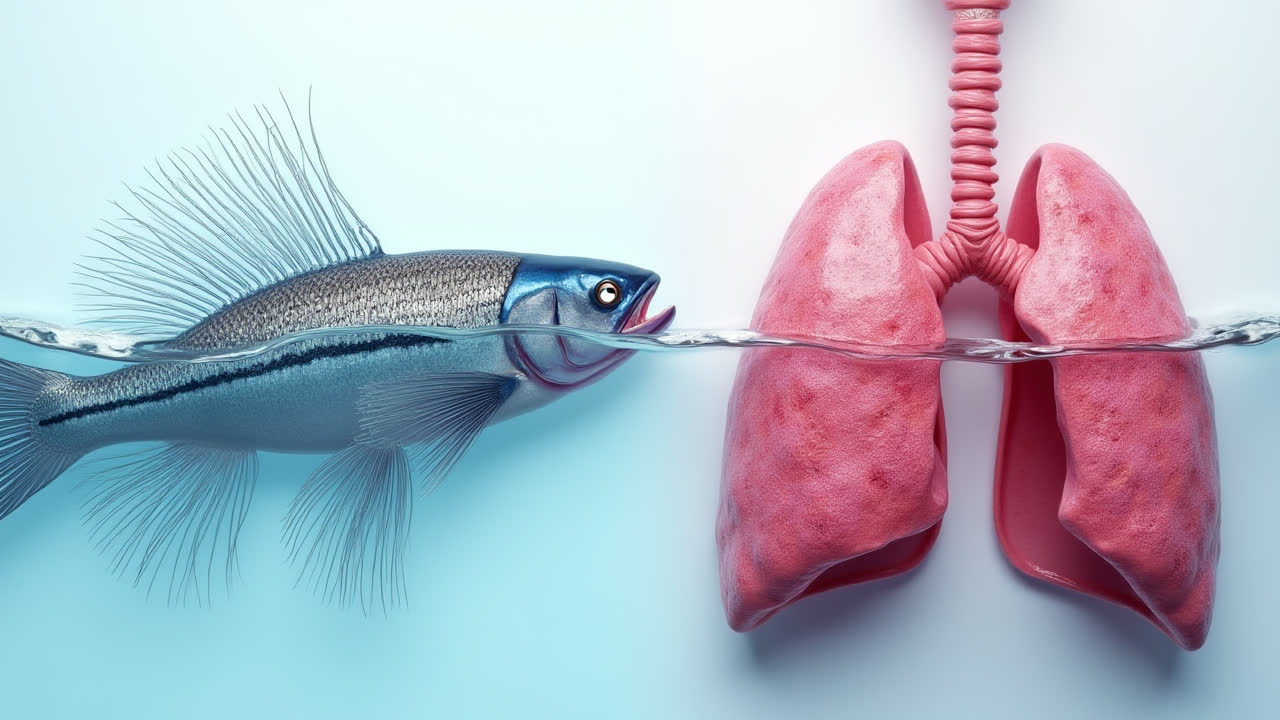
Here's something that might surprise you: gills are essentially external projections, while lungs are internal wonders. This fundamental difference stems from their environments. Gills need direct contact with water to function, so they evolved as external structures with specialized filaments.
Think about it – have you ever seen a fish's gills in action? Those feathery structures behind their head are incredibly delicate. They have to be! Water is much denser than air, and gills need maximum surface area to extract that precious oxygen. A single fish might have thousands of tiny lamellae – those are the comb-like filaments that do the heavy lifting.
On the flip side, lungs are like internal balloons that inflate and deflate. But they're not just simple sacs. Oh no! They're intricate networks of tubes called bronchioles that branch out like a tree, ending in millions of tiny air sacs called alveoli. It's mind-boggling to think that these microscopic structures are where the actual gas exchange happens.
How They Work: The Fascinating Mechanics
Let me paint you a picture: imagine trying to breathe through a straw while swimming – that's somewhat similar to what fish experience! Water flows continuously over their gills, and as it does, oxygen molecules pass through the thin membrane into the bloodstream. It's called countercurrent exchange, and it's incredibly efficient.
Lungs work differently. We actively pull air in and push it out. When you inhale, your diaphragm contracts, creating negative pressure that sucks air into your lungs. The oxygen then diffuses across the alveolar membrane into your bloodstream. It's a more active process compared to how gills work.
Here's a fun tidbit: fish never actually "hold their breath" like we do. Water constantly flows over their gills, even when they're resting. Meanwhile, we land-dwellers have this neat ability to control our breathing – try holding your breath for a minute! Your lungs are quite flexible that way.
Evolutionary Adaptations: A Tale of Two Environments
You know what's really cool? The evolutionary story behind these organs. Gills evolved first, back when life was primarily aquatic. As organisms ventured onto land, they faced a new challenge: extracting oxygen from air instead of water.
Lungs evolved as a solution to this challenge. They're actually modified swim bladders – talk about repurposing! This evolutionary journey explains why some fish, like lungfish, have both gills and primitive lungs. They're living fossils that show us the transition from aquatic to terrestrial life.
The efficiency factor is mind-blowing too. Air contains about 200 times more oxygen than water (by volume). This is why terrestrial animals can sustain higher metabolic rates than their aquatic cousins. It's one reason why mammals evolved to be such active creatures!
| Feature | Gills | Lungs |
|---|---|---|
| Location | External body surface | Internal cavity (thorax) |
| Medium | Water | Air |
| Structure | Rows of filaments/lamellae | Network of tubes and sacs |
| Gas Exchange | Through thin epithelial layer | Through alveolar membrane |
| Flow Type | Continuous unidirectional | Tidal (in and out) |
| Animals | Fish, amphibians, arthropods | Mammals, birds, reptiles |
| Heart Chambers | 2 chambers (usually) | 4 chambers (usually) |
| Oxygen Efficiency | Lower (water has less O2) | Higher (air has more O2) |
Unique Advantages and Challenges
Let's talk about the pros and cons, shall we? Gills have this amazing ability to extract oxygen from a low-concentration medium. Fish have evolved some pretty neat tricks to maximize this efficiency. Some sharks, for instance, need to keep swimming to maintain water flow over their gills.
But gills face a significant challenge: they need a constant water supply. This is why you'll see fish gulping frantically when taken out of water – they're literally suffocating! Their delicate gill filaments collapse without water support, making gas exchange impossible.
Lungs, on the other hand, give us incredible mobility. We can hold our breath, speak, sing, and even survive at high altitudes (with acclimatization). But they're not perfect either. We're vulnerable to air pollution, and our lungs can accumulate fluids during infections, making breathing difficult.
Common Misconceptions Debunked
Here's a misconception I often hear: "Fish can only breathe in water, and land animals can only breathe in air." Well, that's not entirely true! Some fish, like mudskippers, can breathe air temporarily. And dolphins and whales, despite being aquatic, use lungs just like we do.
Another myth? "Gills are primitive compared to lungs." Actually, they're both highly specialized organs. Gills are incredibly efficient at what they do. In fact, they can extract up to 80% of dissolved oxygen from water, while we only extract about 25% from the air we breathe!
And let's clear this up: not all aquatic animals have gills. Sea snakes and sea turtles have lungs and must surface regularly to breathe. Nature's pretty creative with its breathing solutions!
The Future of Respiratory Research
You might be wondering, "Why should I care about all this?" Well, studying gills and lungs has practical applications! Scientists are developing artificial gills for human use – imagine breathing underwater without bulky scuba gear!
Medical researchers are also studying gills to better understand lung diseases. The countercurrent exchange mechanism in gills is being explored for developing more efficient oxygen therapy devices. Who knew fish could teach us about human medicine?
Climate change is affecting both aquatic and terrestrial respiratory systems. As ocean temperatures rise and oxygen levels decrease, fish with gills face increasing challenges. Meanwhile, air quality issues affect lung-breathing creatures. Understanding these organs helps us protect vulnerable species.
Practical Implications for Pet Owners
If you have aquarium fish, understanding gills is crucial. Watch for rapid gill movement – it could indicate low oxygen or poor water quality. Those beautiful flowing gills need clean, well-oxygenated water to function properly.
For pet owners of lung-breathing animals, pay attention to breathing patterns. Birds, for instance, have a unique respiratory system with air sacs that make their lungs extremely efficient. Any changes in breathing could signal health issues early on.
Here's a pro tip: when setting up an aquarium, consider the oxygen requirements of your fish species. Some fish, like bettas, have labyrinth organs that allow them to breathe air directly. Others need well-aerated water with strong water circulation.
Frequently Asked Questions
Can fish survive out of water if their gills stay wet?
Unfortunately, no. While keeping gills wet helps, fish need water pressure to maintain gill structure. Without water, the delicate gill filaments collapse and stick together, reducing surface area. Most fish can only survive a few minutes out of water, even with wet gills. However, some species like lungfish have evolved additional breathing mechanisms for temporary air exposure.
Why do some aquatic mammals like dolphins have lungs instead of gills?
Dolphins and whales are descended from land mammals that returned to the ocean. They retain lungs because it's evolutionarily easier to modify existing respiratory systems than to develop entirely new ones like gills. Their lungs are specially adapted for deep diving and storing oxygen efficiently. They've also evolved blowholes for quick breathing at the surface.
How do amphibians transition between gills and lungs?
Most amphibians undergo metamorphosis where tadpoles with gills gradually develop lungs. During this transition, they often use both systems simultaneously. Tadpoles start absorbing their gill tissue while lung buds grow inside their body. By adulthood, most amphibians primarily use lungs and skin breathing, though some retain gills throughout life. This remarkable transformation allows them to exploit both aquatic and terrestrial environments.