Enculturation vs Acculturation: Understanding the Key Differences
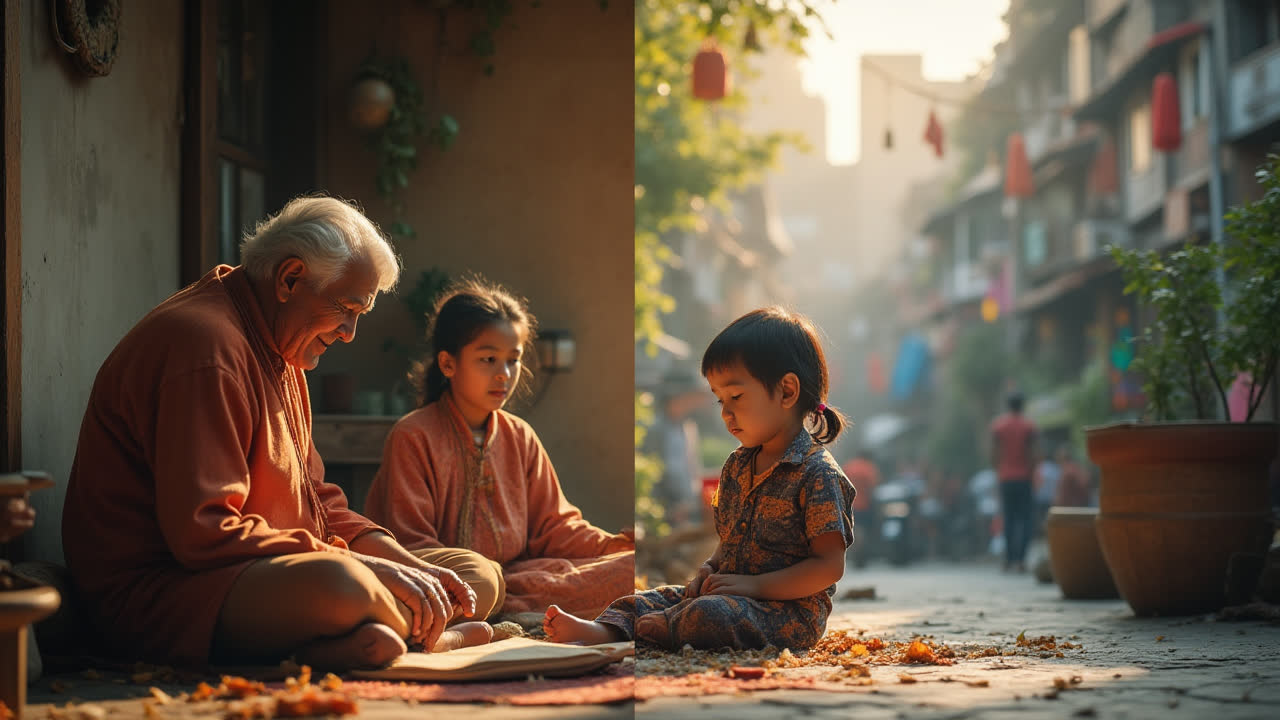
When we discuss how individuals acquire cultural traits and adapt to different cultural environments, two terms frequently come up: enculturation and acculturation. Though they might sound similar, these concepts represent distinct processes in how people interact with cultures. In today's increasingly diverse global society, understanding these differences isn't just academic—it affects how we interpret cultural integration, identity formation, and social cohesion.
Have you ever wondered why you naturally follow certain cultural traditions without questioning them? Or perhaps you've observed how immigrants gradually adopt aspects of their new homeland's culture while maintaining elements of their heritage? These scenarios highlight the fascinating interplay between enculturation and acculturation processes that shape our cultural identities throughout our lives.
What is Enculturation? The First Cultural Imprinting
Enculturation refers to the natural process by which an individual learns and internalizes the traditional content of their native culture. From the moment we're born, we begin absorbing the cultural elements surrounding us—language, values, beliefs, behaviors, and customs. This process happens largely unconsciously as we grow up, making it our primary cultural programming. Think of how naturally you learned your first language or adopted the eating habits of your family—that's enculturation at work!
Parents, family members, educational institutions, and peer groups serve as the primary agents of enculturation. Through observation, imitation, instruction, and correction, children gradually learn "how things are done" in their society. This isn't just about obvious cultural markers like holidays or clothing styles; it extends to deeper elements like moral frameworks, gender roles, communication styles, and attitudes toward authority.
One critical aspect of enculturation is that it's essentially unavoidable. Everyone undergoes this process to some degree, as it's necessary for basic social functioning. Without enculturation, individuals would lack the fundamental tools needed to operate within their social environment. The depth and breadth of enculturation vary, but its influence is profound—shaping not just behaviors but also worldviews, cognitive patterns, and emotional responses.
What is Acculturation? When Cultures Meet and Merge
Unlike enculturation, acculturation occurs when an individual or group encounters and adopts elements from a different culture than their original one. This process typically happens later in life and involves more conscious choices and adaptations. Acculturation is particularly relevant in contexts of migration, colonization, cultural exchange, and globalization—situations where different cultural systems come into sustained contact.
The acculturation process can take various forms, ranging from complete assimilation (abandoning original cultural traits in favor of the new culture) to integration (maintaining original cultural identity while adopting aspects of the new culture). Other patterns include separation (maintaining only the original culture) and marginalization (losing connection with both cultures). These patterns reflect the complex choices and circumstances individuals navigate when bridging different cultural worlds.
For immigrants and refugees, acculturation often involves significant psychological adjustments. Learning new languages, adapting to different social norms, and navigating unfamiliar institutional systems can be both challenging and enriching. I've witnessed friends from overseas struggle with cultural nuances that natives take for granted—like understanding when to make small talk or how to interpret indirect communication styles. These seemingly small cultural differences can create substantial stress during the acculturation process.
In today's interconnected world, acculturation happens not just through physical relocation but also through media, technology, and international commerce. Young people in rural India might adopt elements of American youth culture through social media, while Americans might incorporate Japanese wellness concepts into their lifestyles—all examples of acculturation in our global village.
Enculturation vs Acculturation: A Detailed Comparison
| Aspect | Enculturation | Acculturation |
|---|---|---|
| Definition | Process of acquiring one's own native culture | Process of adapting to or adopting a different culture |
| Timing | Begins at birth and continues throughout life | Typically occurs later in life after enculturation |
| Nature | Largely unconscious and natural | Often more conscious and deliberate |
| Necessity | Essential for basic social functioning | Not essential but often advantageous for adaptation |
| Agents | Family, peers, education system, media | Host society, workplace, social networks, new media |
| Psychological Impact | Forms core identity; usually less stressful | Can cause acculturative stress, identity conflicts |
| Result | Cultural competence in native culture | Varying degrees of bicultural or multicultural competence |
| Examples | Learning mother tongue, observing family traditions | Immigrants learning new language, adopting local customs |
The Interplay Between Enculturation and Acculturation
Rather than viewing enculturation and acculturation as completely separate processes, it's more accurate to see them as interconnected parts of cultural development. Our primary enculturation shapes how we approach and experience later acculturation. Someone with strong enculturation in a culture that values adaptability may find acculturation less stressful than someone enculturated in a tradition that emphasizes cultural preservation.
Similarly, acculturation experiences can prompt individuals to reassess aspects of their original enculturation. An American living abroad might question previously unexamined cultural assumptions about individualism after extended exposure to more collectivist societies. This reflective process can lead to a more consciously chosen cultural identity that integrates elements from multiple cultural frameworks.
In multicultural families, children often experience simultaneous enculturation into multiple cultural systems—perhaps practicing traditional customs at home while absorbing mainstream culture at school. This creates a unique form of dual enculturation that differs from the sequential nature of enculturation followed by acculturation that many immigrants experience.
Modern Challenges and Opportunities
In our increasingly globalized world, both enculturation and acculturation face new dynamics. Digital technology enables unprecedented cultural exchange across borders, creating complex patterns of influence. Young people today may be simultaneously enculturated into their local traditions while acculturating to global youth culture through social media and entertainment.
This cultural fluidity creates both challenges and opportunities. On one hand, rapid acculturation can threaten cultural diversity as dominant global cultures exert disproportionate influence. On the other hand, the ability to navigate multiple cultural frameworks—what researchers call "cultural intelligence"—is becoming an increasingly valuable skill in our interconnected society.
Conclusion: Embracing Cultural Complexity
Understanding the distinction between enculturation and acculturation helps us make sense of cultural identity formation in complex societies. Enculturation provides our foundational cultural programming, while acculturation enables adaptation to new cultural environments. Together, these processes shape how individuals navigate our multicultural world.
As societies become increasingly diverse, appreciating these different pathways to cultural competence becomes essential for fostering inclusive communities. By recognizing that we all undergo different combinations of enculturation and acculturation throughout our lives, we can develop greater empathy for the varied cultural journeys that shape human experience.
Frequently Asked Questions About Enculturation and Acculturation
Can enculturation occur during adulthood?
Yes, enculturation continues throughout life, though its most formative period occurs during childhood and adolescence. Adults can experience deeper enculturation when they actively engage with their cultural heritage or when life transitions (like parenthood) prompt greater cultural participation. However, adult enculturation typically builds upon the foundation established during early development rather than starting from scratch.
Is acculturation always a positive experience?
No, acculturation can be both positive and challenging. While it can expand worldviews and create opportunities for growth, it can also cause "acculturative stress"—the psychological strain from adapting to a new cultural environment. Factors affecting this experience include the receptiveness of the host culture, availability of support systems, individual personality traits, and the circumstances prompting acculturation. Forced acculturation (as in colonization) generally produces more negative outcomes than voluntary acculturation (as in chosen migration).
How does technology impact enculturation and acculturation processes?
Technology dramatically transforms both processes in several ways. For enculturation, digital media now serves as a significant cultural transmission agent alongside traditional sources like family. Children increasingly learn cultural values through online content, sometimes creating generational cultural divides. For acculturation, technology facilitates both cultural maintenance (through connections with homeland) and adaptation (through language learning apps, social media integration with new communities, etc.). Virtual communities also enable new forms of acculturation without physical relocation, as people adopt elements of digital cultures that transcend geographic boundaries.