Codominance vs Incomplete Dominance: Understanding Key Genetic Differences

Understanding Mendelian Inheritance and Its Exceptions
According to Gregor Mendel's classic studies, the phenotype (physical characteristics) of offspring typically resembles one of the parent organisms. This happens because dominant alleles mask the effects of recessive alleles in heterozygous individuals. But nature isn't always so straightforward—genetic inheritance can be far more complex.
Have you ever wondered why some traits seem to blend or show both parental characteristics instead of favoring just one parent? That's where non-Mendelian inheritance patterns like codominance and incomplete dominance come into play. These genetic mechanisms explain situations where alleles aren't strictly dominant or recessive to each other, resulting in phenotypes that differ from what Mendel's laws would predict.
The fundamental difference between these two patterns lies in how the heterozygous genotype is expressed in the offspring's phenotype. While they might seem similar at first glance, they represent distinctly different ways that genes can interact. Understanding these differences is crucial for anyone studying genetics, biology, or breeding—whether you're looking at flower colors, animal coat patterns, or even human blood types.
Let's dive deeper into each of these fascinating genetic concepts to understand how they shape the incredible diversity of traits we see in living organisms.
What is Codominance?
Codominance represents a genetic pattern where both alleles in a heterozygous pair are fully and simultaneously expressed in the phenotype, without any blending or mixing. In simpler terms, when an organism inherits two different alleles for a particular trait, both parental traits appear distinctly in the offspring.
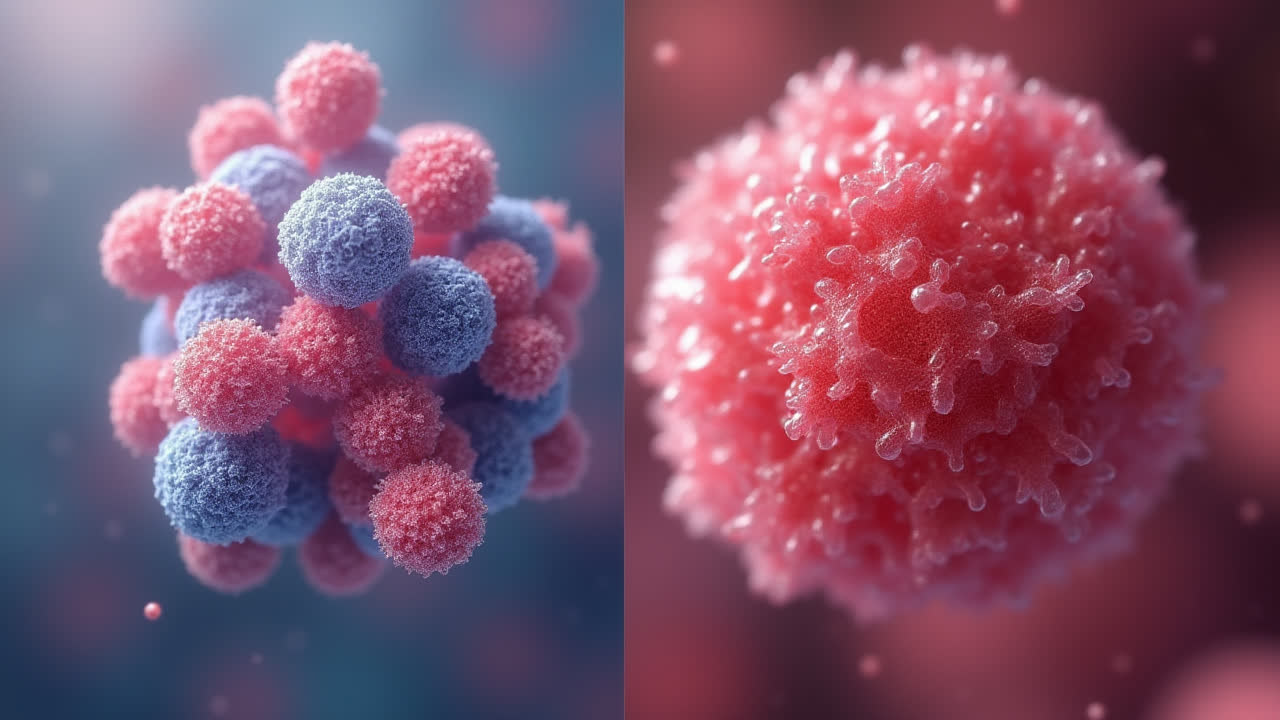
In codominance, neither allele is dominant over the other—instead, both show their full effects independently. This creates a third phenotype that displays both parental characteristics side by side. Think of it as having two different colors of paint that remain separate when placed next to each other, rather than mixing to form a new color.
One of the most well-known examples of codominance in humans is the AB blood type. When a person inherits both A and B alleles (one from each parent), they don't produce a blended blood type—they produce both A and B antigens on their red blood cells, resulting in the unique AB blood type. Similarly, roan cattle demonstrate codominance when they inherit alleles for both red and white coat colors, resulting in a coat that has distinct red and white hairs mixed together rather than a uniform pink color.
Example: When red homozygous Camellia flowers are crossed with white homozygous Camellia flowers, the resulting hybrid flowers display both red and white patches. Both colors appear distinctly in the same flower, rather than blending to create pink flowers.
Codominance is a qualitative approach to gene expression—each allele produces its own distinct effect that can be clearly identified in the phenotype. This happens most commonly when multiple alleles exist for a single gene (a condition called multiple allelism), creating various possible combinations of traits rather than simple dominant-recessive relationships.
What is Incomplete Dominance?
Incomplete dominance occurs when neither allele in a heterozygous pair is fully dominant over the other, resulting in a blended or intermediate phenotype. Unlike codominance where both parental traits are visible separately, incomplete dominance produces a phenotype that appears to be a mixture or average of the two parental traits.
I've always found incomplete dominance fascinating because it's like mixing two paint colors to create an entirely new shade. When two purebred organisms with different traits for the same characteristic breed, their offspring exhibit a phenotype that falls somewhere between the two parental forms. This happens because the effects of both alleles are partially expressed, but in a way that creates a blended appearance rather than showing both traits distinctly.
The classic example of incomplete dominance is the snapdragon flower. When a plant with red flowers (RR) is crossed with a plant with white flowers (rr), the resulting offspring (Rr) have pink flowers—not red or white, but a mixture of the two. The red allele isn't completely dominant over the white allele, nor is it completely recessive, resulting in this intermediate color.
Example: Human characteristics such as height, skin color, and eye color often demonstrate incomplete dominance. These traits typically show a range of phenotypes rather than distinct categories because multiple genes interact, with each contributing partially to the final trait.
Incomplete dominance represents a quantitative approach to gene expression, where the phenotype reflects the proportional influence of each allele. This creates a continuous spectrum of possible phenotypes rather than discrete categories, allowing for greater variation within a population.
Similarities Between Codominance and Incomplete Dominance
Before we dive deeper into their differences, it's worth noting that codominance and incomplete dominance share several important similarities. Both are examples of non-Mendelian inheritance patterns that don't follow the simple dominant-recessive relationship described in Mendel's laws of inheritance.
In both codominance and incomplete dominance, neither allele completely masks the other in heterozygous individuals. This differs from complete dominance, where the dominant allele completely masks the recessive allele's effect. Both mechanisms involve the expression of both alleles in the phenotype, though in different ways.
Another common feature is that both patterns involve intragenic (allelic) interactions—meaning they describe how different versions of the same gene interact with each other. They both occur during the inheritance of heterozygous allele pairs and result in phenotypes that differ from either parent's phenotype alone.
Additionally, both mechanisms play important roles in increasing genetic diversity within populations. By creating additional phenotypes beyond what simple dominant-recessive inheritance would allow, they contribute to the wide variation we see in natural populations of plants, animals, and humans.
Comparison: Codominance vs. Incomplete Dominance
Now let's examine the key differences between these two inheritance patterns with a comprehensive comparison table:
| Characteristic | Codominance | Incomplete Dominance |
|---|---|---|
| Definition | Both alleles are fully expressed simultaneously without mixing | Both alleles are partially expressed, creating a blended phenotype |
| Expression Pattern | Both parental phenotypes are visible distinctly | An intermediate phenotype between both parents is visible |
| Mixing of Traits | No mixing; traits remain separate and identifiable | Traits blend to form an intermediate phenotype |
| Conspicuousness of Alleles | Both alleles are equally conspicuous | One allele may be more conspicuous than the other |
| Approach to Gene Expression | Qualitative (distinct presence of both traits) | Quantitative (proportional influence of both alleles) |
| Effect of Alleles | Both alleles produce their effects independently | Alleles blend to produce an intermediate effect |
| Common Examples | AB blood type, roan cattle, spotted flowers | Pink snapdragons, human height, skin color |
| Visualization | Like red and white spots on the same flower | Like red and white paint mixing to create pink |
Real-World Examples and Applications
Both codominance and incomplete dominance can be observed in various organisms, from plants and animals to humans. These inheritance patterns have significant implications for fields like agriculture, medicine, and evolutionary biology.
In agriculture and horticulture, understanding these inheritance patterns is crucial for breeding programs. Flower breeders leverage incomplete dominance to create new color varieties, while livestock breeders might select for or against codominant traits like the roan coat pattern in cattle, depending on market preferences.
In human genetics, the blood group system provides an excellent example of codominance. The ABO blood type is determined by three alleles: A, B, and O. When a person inherits both A and B alleles, they have type AB blood, demonstrating codominance as both A and B antigens are produced. Similarly, many human traits like skin color, height, and facial features often show incomplete dominance, with children displaying characteristics intermediate between their parents.
These inheritance patterns also have medical relevance. Certain genetic disorders follow non-Mendelian inheritance patterns, which affects how they're diagnosed and their risk of being passed to offspring. Understanding these patterns helps genetic counselors provide more accurate information to families about the likelihood of passing along specific traits or disorders.
From an evolutionary perspective, both codominance and incomplete dominance contribute to genetic diversity within populations. By allowing for additional phenotypes beyond simple dominant and recessive traits, these patterns create more variation upon which natural selection can act, potentially increasing a species' ability to adapt to changing environments.
Frequently Asked Questions About Codominance and Incomplete Dominance
How do codominance and incomplete dominance differ from Mendelian inheritance?
Mendelian inheritance involves complete dominance where one allele completely masks the other in heterozygous individuals. In contrast, codominance and incomplete dominance both involve the expression of both alleles in the phenotype. In codominance, both alleles are fully expressed simultaneously (like AB blood type showing both A and B antigens), while in incomplete dominance, the phenotype is an intermediate blend of both parental traits (like red and white flowers producing pink offspring).
Can a single trait exhibit both codominance and incomplete dominance?
Yes, a single trait can potentially show both inheritance patterns depending on the specific alleles involved. For example, certain flower color genes might show incomplete dominance between some alleles (red × white = pink) but codominance between others (red × yellow = red and yellow patches). Additionally, complex traits influenced by multiple genes might exhibit various inheritance patterns across different gene pairs that contribute to the overall phenotype.
How do scientists determine whether a trait shows codominance or incomplete dominance?
Scientists distinguish between codominance and incomplete dominance through careful observation of phenotypes and controlled breeding experiments. They look at the F1 generation (first-generation offspring) from crosses between pure-breeding parents with different traits. If the offspring show a distinct combination of both parental traits (like spotted patterns or mixed hair colors), it suggests codominance. If the offspring show an intermediate phenotype that blends the parental traits (like pink flowers from red and white parents), it indicates incomplete dominance. Molecular techniques can also be used to examine protein or gene expression patterns to confirm which inheritance pattern is occurring.
Conclusion: Understanding the Spectrum of Genetic Inheritance
Codominance and incomplete dominance represent important concepts in genetics that expand our understanding beyond Mendel's original principles. While they share similarities as non-Mendelian inheritance patterns, they differ fundamentally in how heterozygous alleles are expressed in the phenotype.
In codominance, both alleles express their effects fully and independently, creating a phenotype where both parental traits are visible simultaneously. In incomplete dominance, the phenotype shows a blend or intermediate expression between the two parental traits.
These inheritance patterns demonstrate the beautiful complexity of genetics and help explain the incredible diversity of traits we observe in living organisms. From blood types to flower colors, understanding these genetic mechanisms provides insight into how traits are passed from generation to generation in ways that go beyond simple dominant-recessive relationships.
By recognizing the differences between codominance and incomplete dominance, we gain a more nuanced appreciation for the genetic foundations of biological diversity and the intricate ways in which genes interact to create the vast array of life forms that populate our planet.