Cast Iron vs Steel: Key Differences You Need to Know
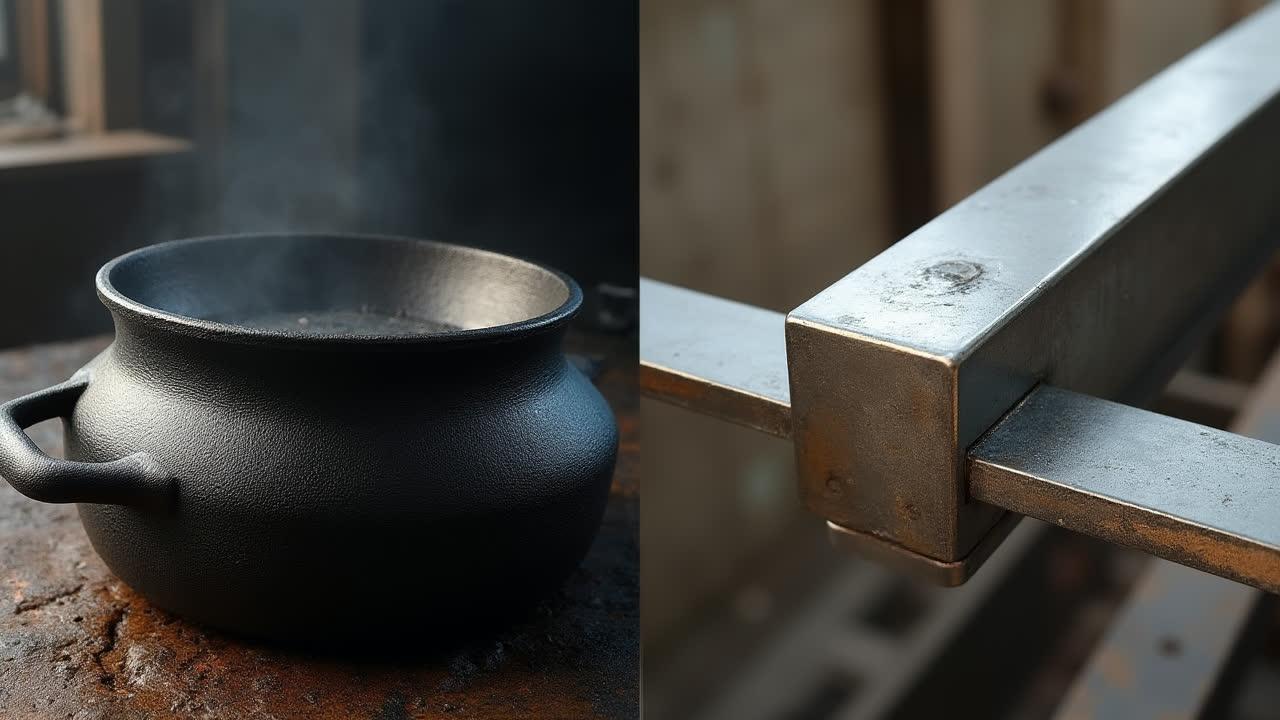
When it comes to construction materials, cast iron and steel stand as two of the most widely used metals in various industries. Both are alloys containing iron and carbon, but don't let that similarity fool you! The differences between these materials are significant and understanding them can help you make better decisions for your projects. Have you ever wondered why some structures use steel while others rely on cast iron? Let's dive into this metal showdown.
I've worked with both materials in various projects over the years, and I can tell you firsthand that choosing between cast iron and steel isn't always straightforward. Each has its own unique set of properties that make it suitable for specific applications. In this comprehensive guide, we'll explore everything from composition and physical properties to manufacturing processes and practical applications of both cast iron and steel.
Understanding the Basics: What Are Cast Iron and Steel?
Before jumping into the differences, let's establish what these materials actually are. Both cast iron and steel are ferrous alloys - meaning they contain iron as their principal element. However, the way they're formulated and processed gives them entirely different characteristics.
What is Cast Iron?
Cast iron is an iron-based alloy containing a high carbon content - typically between 2% and 4% by weight. It also contains silicon (usually 1-3%), which plays a crucial role in determining the properties of the final product. The name "cast iron" comes from its manufacturing process - it's typically cast (poured while molten) into molds to create the desired shape. I remember visiting a foundry years ago and being mesmerized by the glowing molten cast iron being poured into intricate molds - quite a spectacular sight!
This material has been used for centuries, and you've probably encountered it more often than you realize. Those heavy black skillets in your grandmother's kitchen? Classic cast iron. The decorative benches in the park? Often made of cast iron. The material's high carbon content gives it excellent heat retention properties but also makes it relatively brittle compared to steel.
What is Steel?
Steel, on the other hand, is an iron-carbon alloy with a significantly lower carbon content - usually less than 2.1% by weight. This controlled carbon content is what gives steel its remarkable versatility. Steel can be formulated in countless ways by adding various elements like chromium, nickel, or manganese to create different grades with specific properties.
The modern world is quite literally built on steel. From the framework of skyscrapers to the body of your car, steel's combination of strength, ductility, and relatively low cost has made it indispensable. Unlike cast iron, steel is typically more malleable and can be shaped through various processes like rolling, forging, or drawing, which opens up a much wider range of applications.
I once worked on a renovation project where we had to decide between steel beams and cast iron columns. The decision wasn't just about strength - it involved considerations of weight, cost, appearance, and installation methods. That project taught me how important it is to understand the fundamental differences between these materials.
Key Differences in Composition and Properties
The primary distinction between cast iron and steel lies in their carbon content. This seemingly small difference in composition leads to dramatically different physical and mechanical properties that affect everything from manufacturing to practical applications.
Composition Differences
The most significant compositional difference is the carbon content. Cast iron contains significantly more carbon (2-4%) than steel (typically less than 2.1%). This higher carbon content in cast iron exists mostly as graphite flakes or nodules within the metal matrix. In addition to carbon, cast iron typically contains silicon (1-3%), which helps promote the formation of graphite during solidification.
Steel's composition is more tightly controlled, with precise amounts of carbon and other alloying elements added to achieve specific properties. For example, adding chromium creates stainless steel, which is resistant to corrosion. Adding tungsten creates high-speed steel that can maintain hardness even at high temperatures. The versatility of steel's composition is one of its greatest advantages.
Physical Properties
Due to their different compositions, cast iron and steel exhibit markedly different physical properties:
- Melting Point: Cast iron has a lower melting point (around 1150-1200°C) compared to steel (approximately 1370-1430°C). This makes cast iron easier to cast into complex shapes but limits its high-temperature applications.
- Density: Cast iron is slightly less dense than steel, though both are considered heavy metals.
- Thermal Properties: Cast iron has excellent heat retention capabilities and distributes heat evenly - one reason why it's favored for cookware. Steel has good thermal conductivity but doesn't retain heat as well as cast iron.
- Electrical Conductivity: Both materials are conductors of electricity, but their conductivity is relatively low compared to metals like copper or aluminum.
Mechanical Properties
The mechanical behavior of these materials differs substantially:
- Strength: Cast iron has higher compressive strength, making it suitable for applications where the material needs to withstand heavy loads. Steel, however, has superior tensile strength, allowing it to resist stretching or pulling forces more effectively.
- Ductility: Steel is significantly more ductile than cast iron. It can be bent, stretched, or deformed without breaking, whereas cast iron is brittle and tends to crack when subjected to similar forces.
- Machinability: Cast iron is generally easier to machine than steel, as it produces chips that break away cleanly during cutting operations. Steel tends to form continuous chips that can be more challenging to manage during machining.
- Wear Resistance: Cast iron typically offers better wear resistance and can handle abrasive conditions more effectively than many types of steel.
Manufacturing Processes
The names of these materials give clues to how they're typically processed. The manufacturing methods for cast iron and steel are quite different, each taking advantage of the material's inherent properties.
Cast Iron Production
As its name suggests, cast iron is primarily processed through casting. The production process typically involves:
- Melting pig iron (a primary iron product from blast furnaces) along with scrap iron and other additives
- Pouring the molten metal into molds of the desired shape
- Allowing the metal to cool and solidify
- Removing the casting from the mold and performing finishing operations as needed
The casting process allows for creating complex shapes with intricate details, often with minimal machining required afterward. This can be particularly economical for large, complex parts that would be difficult to create through other means. I once visited a specialty foundry where they were casting ornate iron railings for a historic building restoration - the level of detail achievable through casting was remarkable.
Steel Production
Steel production is more versatile and involves multiple possible routes:
- Primary production: Converting iron ore into steel through blast furnaces and basic oxygen furnaces or electric arc furnaces
- Secondary processing: Rolling, forging, drawing, or extruding the steel into desired shapes
- Heat treatment: Applying specific heating and cooling cycles to achieve desired properties
- Finishing: Grinding, polishing, coating, or other treatments to complete the product
Unlike cast iron, steel can be worked in numerous ways after initial production. It can be rolled into sheets, drawn into wire, forged into complex shapes, or machined with precision. This versatility in processing is one of steel's greatest advantages. During a tour of a steel mill a few years back, I was amazed by the transformation of glowing steel slabs into perfectly formed I-beams in what seemed like minutes - the efficiency of modern steel processing is truly impressive.
Applications and Uses
The distinct properties of cast iron and steel make them suitable for different applications. Understanding these applications can help you choose the right material for your specific needs.
Common Cast Iron Applications
Cast iron excels in applications that leverage its compressive strength, heat retention, and vibration damping capabilities:
- Cookware and kitchen equipment: Cast iron skillets, Dutch ovens, and griddles are prized for their excellent heat retention and distribution
- Engine blocks and cylinder heads: The material's ability to dampen vibration and withstand heat makes it suitable for these automotive components
- Pipes and fittings: Particularly for underground water and sewage systems, though plastic has replaced many of these applications
- Machine bases: The vibration-damping properties make cast iron ideal for the bases of precision machinery
- Architectural and decorative elements: Railings, benches, lamp posts, and ornamental details
- Woodstoves and fireplace components: Due to its heat retention and fire resistance
I have a cast iron woodstove in my cabin that's been steadily heating the place for over 30 years. That kind of longevity and reliable performance is characteristic of well-made cast iron products.
Common Steel Applications
Steel's versatility makes it the material of choice for countless applications:
- Construction: Structural beams, reinforcing bars for concrete, roofing, and cladding
- Transportation: Automotive bodies, railway tracks, shipping containers, and aircraft components
- Tools and machinery: Everything from simple hand tools to complex industrial equipment
- Appliances: Refrigerators, washers, dryers, and other household items
- Energy infrastructure: Oil and gas pipelines, wind turbine towers, power plant components
- Food and beverage packaging: Cans and containers (typically using specialized coated steel)
- Medical equipment: Surgical instruments and certain medical devices benefit from steel's strength and sterilization capabilities
The adaptability of steel is truly remarkable. By adjusting its composition and processing, manufacturers can create steel suited for everything from delicate watch springs to massive bridge supports. During a recent kitchen renovation, I chose stainless steel appliances for their durability and modern appearance - another example of how steel has become integrated into our daily lives.
Detailed Comparison: Cast Iron vs Steel
| Property/Characteristic | Cast Iron | Steel |
|---|---|---|
| Carbon Content | High (2-4%) | Lower (typically <2.1%) |
| Melting Point | Lower (1150-1200°C) | Higher (1370-1430°C) |
| Strength Type | Higher compressive strength | Higher tensile strength |
| Ductility | Brittle, breaks easily | Malleable, forms chips when ground |
| Machinability | Easier to cast, more difficult to weld | More difficult to cast, easier to weld |
| Cost | Generally cheaper | More expensive, varies by grade |
| Heat Retention | Excellent | Moderate to good |
| Corrosion Resistance | Poor (rusts easily without treatment) | Varies by type (stainless steel excellent) |
| Weight | Heavier for same volume | Lighter for same strength |
| Common Uses | Cookware, engine blocks, pipes | Construction, vehicles, appliances |
Cost Considerations
When deciding between cast iron and steel, cost is often a significant factor. The price difference between these materials stems from their composition, processing requirements, and market factors.
Generally speaking, cast iron is less expensive than steel. This cost advantage comes from several factors: cast iron requires less processing, uses more recycled materials, and the casting process itself can be more economical for complex shapes than the multiple forming operations often needed for steel parts.
However, this simple comparison doesn't tell the whole story. The total cost of using either material should consider:
- Material cost per unit
- Fabrication expenses (machining, joining, finishing)
- Maintenance requirements over the product's lifetime
- Expected lifespan of the component
- Weight-related costs (transportation, structural support requirements)
For example, while a cast iron pipe might cost less initially than a stainless steel equivalent, the stainless option might prove more economical over time due to its superior corrosion resistance and reduced maintenance needs. I learned this lesson the hard way when I chose cast iron plumbing fittings for a bathroom renovation based solely on the initial price - the replacement costs a few years later definitely outweighed the initial savings!
Making the Right Choice: Cast Iron or Steel?
Selecting between cast iron and steel ultimately depends on your specific application. Here are some guidelines to help you make an informed decision:
Choose cast iron when you need:
- Excellent vibration damping and noise reduction
- Superior heat retention and even heat distribution
- Good compressive strength
- Complex shapes that would be difficult or expensive to machine
- Components that will experience minimal tension or bending forces
- A vintage or traditional aesthetic
Choose steel when you need:
- High tensile strength and ductility
- Resistance to bending, stretching, or impact
- Lighter weight for the same strength
- Weldability and ease of joining
- Specific properties achieved through alloying (like corrosion resistance)
- A component that will be subjected to dynamic loads
In some cases, hybrid approaches can be beneficial. For instance, machine tools often use cast iron for the base (to dampen vibrations) and steel for moving components (to provide strength and precision). I've seen this complementary use of materials create products that outperform those made from either material exclusively.
Conclusion: Understanding the Strengths and Limitations
Both cast iron and steel have played crucial roles in the development of our modern world, and both continue to be invaluable materials across numerous industries. The key to using them effectively lies in understanding their distinct properties and choosing the right material for your specific application.
Cast iron excels in applications requiring heat retention, vibration damping, and compressive strength, while steel shines where tensile strength, ductility, and versatility are paramount. Each has its unique place in the toolbox of materials available to engineers, designers, and builders.
As with many choices in life, there's rarely a universally "better" option - just better-suited materials for particular purposes. By understanding the fundamental differences between cast iron and steel outlined in this article, you'll be well-equipped to make informed decisions for your next project, whether you're building a skyscraper or simply choosing a new pan for your kitchen.
Frequently Asked Questions
Is cast iron stronger than steel?
The question of strength depends on how you're measuring it. Cast iron has higher compressive strength, meaning it can withstand greater squeezing or crushing forces than many types of steel. However, steel has significantly higher tensile strength, making it more resistant to stretching or pulling forces. Steel is also much more ductile and can bend without breaking, while cast iron is brittle and will typically crack under similar stress. For applications where impact resistance or flexibility is needed, steel is generally considered stronger. The right choice depends entirely on the specific forces and conditions your material will face.
Why is cast iron used for cooking?
Cast iron is ideal for cooking for several reasons. Its excellent heat retention allows for even cooking temperatures, reducing hot spots that can burn food. Once heated, cast iron cookware stays hot longer than other materials, which is perfect for searing meat or keeping food warm. The material also becomes naturally non-stick when properly seasoned. Additionally, cast iron cookware can safely go from stovetop to oven, making it versatile for various cooking methods. Finally, cast iron can actually add small amounts of dietary iron to food, which can be beneficial for people with iron deficiencies. These properties, combined with its legendary durability (many cast iron pans remain in use for generations), make it a favorite among both professional chefs and home cooks.
Can steel rust faster than cast iron?
Generally, unprotected carbon steel will rust faster than cast iron. While both materials will corrode when exposed to moisture and oxygen, cast iron typically forms a more stable rust layer that can actually protect the underlying metal to some extent. However, the rust resistance varies significantly depending on the specific type of steel or cast iron. Stainless steel, which contains chromium, is highly resistant to rusting compared to both regular steel and cast iron. The chromium forms a passive oxide layer that prevents oxygen from reaching the underlying metal. Cast iron with higher silicon content also shows improved corrosion resistance. Proper maintenance, such as seasoning cast iron cookware or applying protective coatings to steel, can significantly extend the life of both materials by preventing rust formation.