Breed vs Species: Understanding the Key Differences and Similarities
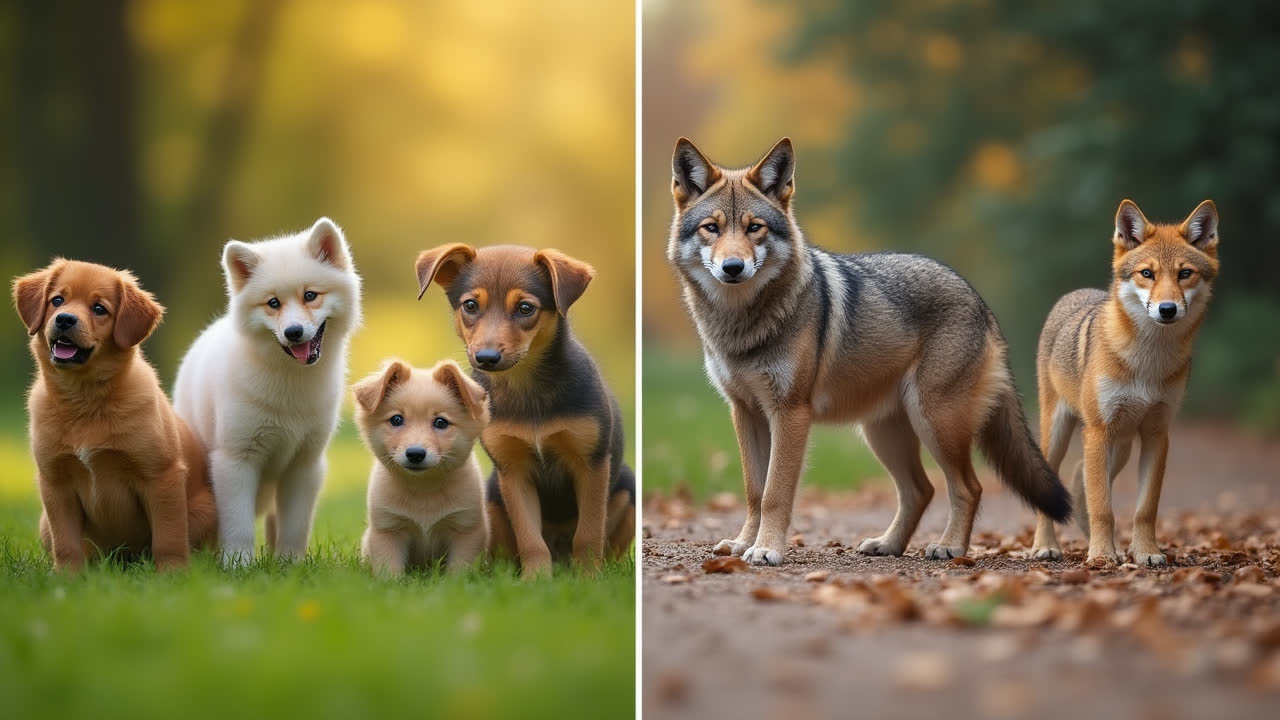
Have you ever wondered about the difference between breed and species? These biological classifications often create confusion, especially when we look at the diversity of animals around us. While we casually talk about different dog breeds or plant species, the scientific distinction between these terms is actually quite significant.
Understanding the breed vs species distinction helps us comprehend how biological diversity works and how humans have influenced animal populations over thousands of years. I've always been fascinated by how selective breeding has transformed wolves into the incredible variety of dog breeds we see today – from tiny Chihuahuas to massive Great Danes – while they all remain part of the same species!
In this comprehensive guide, we'll explore what makes a breed different from a species, examine real-world examples, and clarify the scientific and practical implications of these distinctions. Whether you're a biology student, animal enthusiast, or just curious about the natural world, this article will help you understand these fundamental biological concepts.
What Is a Breed?
A breed refers to a specific group of animals within a particular species that possesses distinctive characteristics produced through selective breeding. Think of it as a human-guided process where we identify genes that enhance certain traits like growth, nutrient utilization, health, appearance, or behavior. When we talk about breeds, we're usually discussing domesticated animals like dogs, cats, horses, cattle, and other livestock.
I remember visiting a dog show once and being amazed at how dramatically different each breed looked – from the flat-faced Bulldog to the slender Greyhound – yet genetically, they're all remarkably similar. Breeding programs aim to reduce environmental influence on gene expression, creating animals with predictable traits and characteristics. This is why a Border Collie puppy will almost certainly grow up with herding instincts, even if raised in an apartment with no sheep in sight!
Different breeds are characterized by their unique appearances and behaviors compared to other breeds within the same species. The creation of breeds typically involves genetic isolation – essentially limiting which animals can mate with each other. Over time, this leads to distinct populations with specific traits. Sometimes natural adaptation to different environments can also produce separate breeds, though most modern breeds result from deliberate human selection.
Common examples of breeds include numerous dog varieties like German Shepherds and Rottweilers, cat breeds like Siamese and Maine Coon, horse breeds like Arabian and Clydesdale, and cattle breeds like Holstein and Angus. Each of these breeds has been developed for specific purposes, whether for companionship, work, milk production, or meat quality.
What Is a Species?
A species, in contrast to a breed, is a fundamental biological classification that refers to a group of organisms that can interbreed and produce fertile offspring in nature. Species can include animals, plants, or microorganisms, making it a much broader classification than breeds. When biologists classify organisms as the same species, they're recognizing that these organisms share a common gene pool.
The concept of species involves what scientists call "gene flow" – the exchange of genetic material between individuals in a population. This gene flow doesn't normally occur between different species, which is one way we identify separate species in nature. Occasionally, I've read about hybrids like mules (horse and donkey offspring) or ligers (lion and tiger offspring), but these hybrids are typically sterile, confirming that their parents belong to different species.
New species emerge through a process called speciation, which happens when populations of the same species become physically, behaviorally, or reproductively isolated from each other. Over time, these isolated populations develop enough genetic differences that they can no longer produce fertile offspring together. This might happen when populations are separated by geographic barriers like mountains or oceans, or when they develop different mating behaviors or timing.
In biological classification, species is considered the fundamental taxonomic level. Scientists use morphological characteristics (physical features), behavioral traits, genetic markers, and ecological factors to define and distinguish different species. Examples of distinct species include Felis catus (domestic cat), Panthera leo (lion), Apis mellifera (western honey bee), Eichhornia crassipes (common water hyacinth), and Escherichia coli (a bacterium).
Breed vs Species: Comprehensive Comparison
| Comparison Point | Breed | Species |
|---|---|---|
| Definition | A stock of animals within a particular species with distinctive characteristics produced by selective breeding | A group of living organisms that share similar characteristics and can breed to produce fertile offspring |
| Organism Types | Typically limited to domestic animals | Can include animals, plants, and microorganisms |
| Group Size | Smaller than a species (subdivision of species) | Larger group that may contain multiple breeds |
| Selection Method | Artificially selected by humans | Naturally selected through evolution |
| Individual Variations | Relatively low variation between individuals | Higher variation between individuals |
| Subdivisions | Generally lacks formal subdivisions | Can be divided into subspecies |
| Creation Timeframe | Can be developed relatively quickly (decades to centuries) | Develops over long evolutionary periods (typically thousands to millions of years) |
| Example | Labrador Retriever (a breed of Canis lupus familiaris) | Canis lupus (wolf species, which includes domestic dogs) |
Key Similarities Between Breed and Species
Despite their differences, breeds and species do share some important similarities. Understanding these commonalities helps us see how these biological classifications relate to each other:
- Reproductive Compatibility: Both breeds and species classifications involve groups of organisms that can successfully breed among themselves to produce fertile offspring. This is a fundamental biological principle that applies across these classifications.
- Shared Characteristics: Members of the same breed or species typically share similar morphological (physical) and behavioral characteristics. These shared traits help identify and categorize organisms.
- Genetic Similarity: Individuals within the same breed or species have a high degree of genetic similarity compared to organisms from different breeds or species. This genetic relatedness is what makes successful reproduction possible.
- Population Distinctiveness: Both classifications represent distinct populations that can be identified and differentiated from other populations based on observable characteristics.
While walking through my local park last weekend, I watched a group of Golden Retrievers playing together at a dog meetup. Despite some variations in coat shade and size, their shared breed characteristics were immediately obvious – the friendly temperament, the feathered golden coat, the broad head. Similarly, I could easily distinguish them from the squirrels and birds in the park, which represent entirely different species. Both levels of classification – breed and species – help us make sense of the biological diversity around us.
Notable Differences Between Breed and Species
The most fundamental difference between breed and species is that breeds are human-created subdivisions within a species, while species are natural biological units shaped by evolution. A species can contain multiple breeds, but a breed always belongs to a single species.
One key distinction I've noticed is how quickly breeds can change compared to species. I remember reading about how most modern dog breeds were developed just in the last 200 years – a blink of an eye in evolutionary terms. In contrast, the speciation process that creates new species typically takes thousands or even millions of years of natural selection and genetic isolation.
Another significant difference lies in the purpose behind each classification. Breeds are deliberately developed for specific human needs or preferences – whether that's hunting ability in dogs, milk production in cattle, or wool quality in sheep. Species, on the other hand, emerge naturally as organisms adapt to their environments and ecological niches through evolution. No one "designed" the eagle or the oak tree; they evolved through natural processes.
The degree of variation within these groups also differs substantially. Breeds tend to have relatively low individual variation since they're selected for consistency in specific traits. You can usually predict what a purebred Dalmatian puppy will look like as an adult. Species, however, often show much more individual variation. Just think about how diverse human beings are in appearance while all belonging to the same species!
In scientific classification, species hold a formal taxonomic rank in the biological hierarchy (kingdom, phylum, class, order, family, genus, species), while breeds are not part of this formal classification system. Instead, breeds are more practical groupings used by breeders, farmers, and pet owners.
Practical Examples of Breeds and Species
Let's look at some real-world examples to better understand the breed vs species distinction:
Dog Examples
Dogs all belong to a single species – Canis lupus familiaris (technically a subspecies of Canis lupus, the wolf). Despite their incredible diversity in size, appearance, and behavior, all dog breeds can potentially interbreed and produce fertile puppies. From the tiny Chihuahua to the massive Great Dane, breeds like German Shepherd, Poodle, Bulldog, and Labrador Retriever are all varieties within this one species.
Cat Examples
Similarly, all domestic cats belong to the species Felis catus. Breeds like Siamese, Persian, Maine Coon, and Abyssinian are all selectively bred varieties of this same species. In contrast, lions (Panthera leo), tigers (Panthera tigris), and leopards (Panthera pardus) are different species within the same genus Panthera.
Plant Examples
While we typically use "variety" rather than "breed" for plants, the concept is similar. All cultivated broccoli, cauliflower, kale, Brussels sprouts, and cabbage are actually varieties of a single species – Brassica oleracea. They've been selectively bred to develop different edible parts. In contrast, rice (Oryza sativa), wheat (Triticum aestivum), and corn (Zea mays) are distinct species.
I remember being stunned when I first learned that all those different vegetables – from cauliflower to kale – were essentially the same species! It's a powerful example of how selective breeding can create enormous diversity within a single species, much like what we see with dog breeds.
Frequently Asked Questions
Can different breeds interbreed successfully?
Yes, different breeds within the same species can almost always interbreed successfully and produce fertile offspring. For example, a Labrador Retriever and a Poodle can mate and produce Labradoodle puppies that are themselves fertile. This successful interbreeding is precisely why breeds are considered subdivisions of a species rather than separate species. However, there might be practical difficulties with certain extreme breeds – for instance, a Great Dane and a Chihuahua would face physical challenges in natural mating, though artificial insemination could still result in viable offspring.
How long does it take to develop a new breed versus a new species?
The timeframes for developing breeds and species differ dramatically. New breeds can be developed relatively quickly – sometimes within just a few decades of selective breeding for specific traits. For example, the Australian Labradoodle was first bred in the 1980s and is now recognized as an established breed in some registries. In contrast, new species typically develop through natural processes over thousands to millions of years. Speciation requires genetic divergence significant enough that the populations can no longer produce fertile offspring together – a process that occurs gradually through geographic isolation, adaptation to different environments, or other mechanisms of reproductive isolation.
Are there breeds among wild animals or only among domesticated ones?
The term "breed" is primarily used for domesticated animals that have undergone selective breeding by humans. In wild animals, we typically use the term "subspecies" rather than "breed" to describe distinct populations within a species that have evolved differences due to geographic isolation or adaptation to specific environments. For example, the Bengal tiger and Siberian tiger are subspecies of tiger (Panthera tigris). While subspecies arise through natural processes rather than human intervention, they serve a somewhat similar role in classification – identifying distinct populations within a species. The key difference is that breeds are deliberately developed through artificial selection, while subspecies emerge through natural selection and geographic isolation.
Conclusion
Understanding the difference between breed and species helps us appreciate both natural biodiversity and human influence on animal populations. While species are the fundamental units of biological classification that emerge naturally through evolution, breeds represent human-guided variations within species, developed through selective breeding for specific traits and purposes.
The next time you look at different dog breeds at the park or various plant varieties in your garden, you'll be able to appreciate the scientific distinction between these biological concepts. While breeds showcase the remarkable plasticity within a species' genetic makeup, the boundaries between species remind us of the deeper evolutionary divergences that have shaped life on Earth.
Whether you're an animal lover, gardener, biology student, or just curious about the natural world, grasping these basic biological classifications enhances our understanding of the living world around us. And isn't that what makes learning about nature so rewarding? I know that for me, understanding these distinctions has made my observations of the natural world so much richer and more interesting.