Ammonia vs Ammonium: Key Differences Explained
Ammonia vs Ammonium: Understanding the Fundamental Differences
When we talk about nitrogen compounds, ammonia and ammonium often come up in the same conversation. But here's the thing that trips up many chemistry students - these two are actually quite different! As someone who's spent countless hours explaining this to my students, I can tell you that the main difference between ammonia and ammonium is that ammonia is a neutral compound while ammonium is a positively charged ion.
Think of it like identical twins who took different life paths. They share the same nitrogen-hydrogen backbone, but their personalities (and chemical behaviors) couldn't be more different. The presence or absence of hydrogen bonds and electron pairs makes all the difference in the world.
What Exactly is Ammonia Anyway?
Picture this: three hydrogen atoms arranged like a three-legged stool around a nitrogen atom. That's ammonia for you - a simple yet fascinating molecule with the chemical formula NH₃. I like to think of ammonia as the more "independent" sibling in this family.
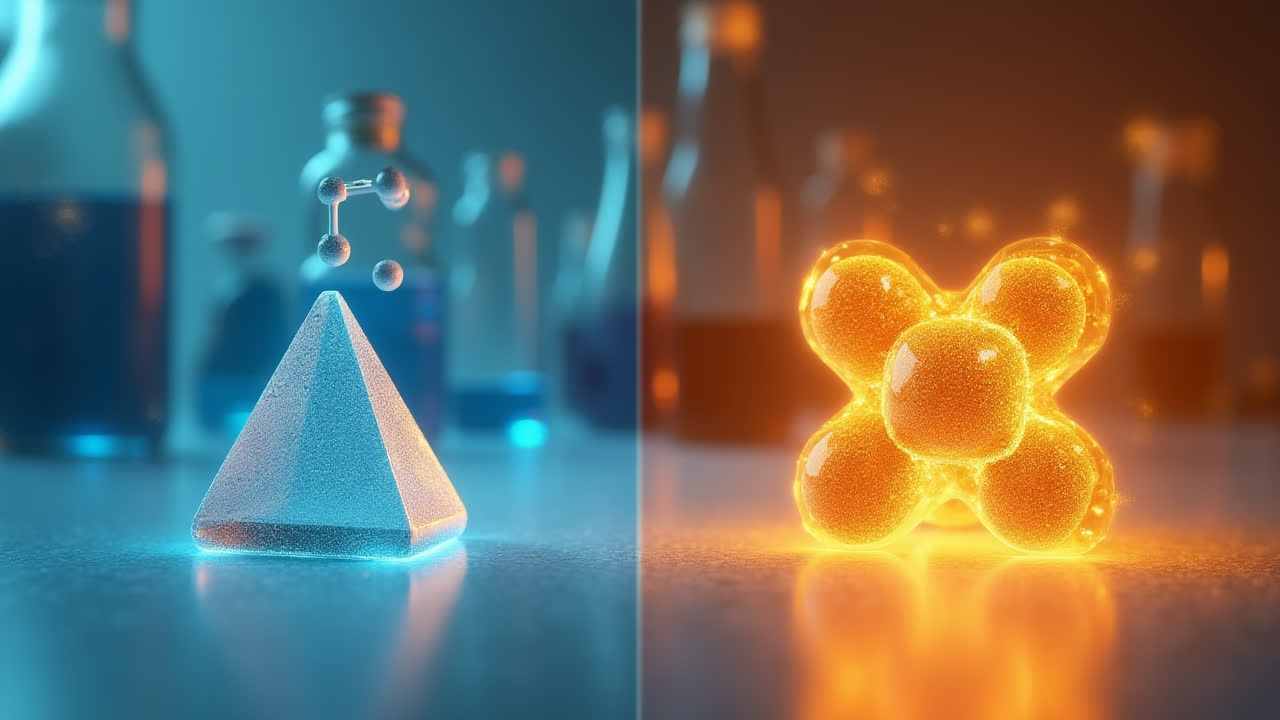
Here's what makes ammonia special: it has a trigonal pyramidal shape. The most interesting part? That nitrogen atom holds onto a lone pair of electrons like a secret treasure. This lone pair is what gives ammonia its alkaline nature and that characteristic sharp, pungent smell that makes your eyes water.
Did you know that ammonia is actually lighter than air? This might surprise you, but that's why ammonia gas rises when released. The bond angle in the molecule is 107° - just slightly less than the typical 109° you'd expect for a tetrahedral shape. That tiny difference comes from the repulsion between the lone pair and bonding pairs.
Understanding Ammonium: The Charged Sibling
Now, let's talk about ammonium - the ionized form with the chemical formula NH₄⁺. This is where things get really interesting! When ammonia meets a proton (H⁺), it undergoes a transformation that's like putting on a charged coat.
Unlike its neutral sibling, ammonium doesn't have any lone pairs. All four hydrogen atoms are bonded directly to the nitrogen. The result? A perfectly symmetrical shape with 109° bond angles all around. It's like a perfect pyramid of bonds!
Here's a fun fact that always amazes my students: that positive charge on ammonium makes it behave completely differently from ammonia. While ammonia is a gas under normal conditions, ammonium only exists as part of a compound - typically in salts like ammonium chloride or ammonium sulfate.
The Chemistry of Their Differences
Let's dive into the nitty-gritty details that separate these two compounds. The chemical differences are where the real fun begins!
- Charge: Ammonia is neutral, while ammonium carries a +1 charge
- Structure: Both have trigonal pyramidal geometry, but ammonium is more symmetrical
- Bond angles: Ammonia has 107°, ammonium has 109°
- pH behavior: Ammonia is alkaline, ammonium is slightly acidic
- Electron pairs: Ammonia has a lone pair, ammonium doesn't
One thing that often confuses people is the interconversion between these two forms. When you dissolve ammonia in water, it can accept a proton and become ammonium. The equilibrium is super sensitive to pH changes. It's like a dance between the two forms, constantly shifting based on conditions.
Comparison Table: Ammonia vs Ammonium
| Property | Ammonia (NH₃) | Ammonium (NH₄⁺) |
|---|---|---|
| Chemical Formula | NH₃ | NH₄⁺ |
| Electrical Charge | Neutral | +1 (Cation) |
| IUPAC Name | Azane | Azanium |
| Lone Electron Pairs | One lone pair | No lone pairs |
| Bond Angle | 107° | 109° |
| pH Nature | Alkaline | Slightly acidic |
| Molar Mass | 17.031 g/mol | 18.039 g/mol |
| Common Form | Gas, liquid, or aqueous solution | Ion in salts or solutions |
Real-World Applications and Considerations
You know what's fascinating? Despite their chemical differences, both compounds find extensive use in our daily lives. Ammonia is crucial in fertilizer production - it's literally what feeds the world! When you see those lush green farm fields, you're looking at ammonia's handiwork.
On the other side, ammonium salts are everywhere in household products. Ever wondered what makes some cleaning products work so well? Often, it's ammonium compounds doing the heavy lifting. They're also common in fertilizers, though they behave differently than pure ammonia.
A word of caution from someone who's worked with these compounds: ammonia gas can be dangerous. That pungent smell isn't just annoying - it's your body's warning system. Proper ventilation is crucial when handling ammonia, while ammonium compounds, being in salt form, are generally safer to handle.
The Bottom Line on Ammonia vs Ammonium
Here's what I tell my students when they're preparing for exams: remember that ammonia and ammonium might look similar on paper, but they're as different as night and day in their chemical behavior. The key difference? That extra hydrogen and positive charge on ammonium completely change its personality.
If you're working in a lab or just trying to understand basic chemistry, knowing this difference is crucial. It affects everything from how you handle the compound to what applications it's suitable for. Next time someone mentions these compounds, you'll know exactly what they're talking about!
Remember: ammonia is the free spirit with its lone pair, while ammonium is the charged-up, electron-complete version. Both are essential in chemistry, but they play by completely different rules!
Frequently Asked Questions
Can ammonia turn into ammonium?
Yes, ammonia can convert to ammonium when it accepts a proton (H⁺). This commonly happens when ammonia is dissolved in water. The process is reversible and depends on pH conditions. In acidic environments, more ammonia converts to ammonium, while in basic conditions, more ammonium converts back to ammonia.
Which is more dangerous: ammonia or ammonium?
Ammonia gas is generally more dangerous due to its volatile nature and strong odor. It can cause respiratory irritation and eye damage when inhaled or contacted. Ammonium compounds, being in salt form, are typically safer to handle but can still be irritating. Always use proper safety equipment when handling either compound.
Why does ammonium have a positive charge?
Ammonium has a positive charge because it forms when ammonia's lone electron pair accepts a proton (H⁺). This additional hydrogen doesn't bring its own electron, so the molecule ends up with one more proton than electrons, resulting in a net +1 charge. This makes ammonium a cation that needs to balance with negative ions in compounds.