Aesthetics vs Esthetics: Key Differences and Proper Usage Explained
Have you ever noticed both aesthetics and esthetics used in different publications and wondered if they mean the same thing? You're not alone. This common source of confusion stems from regional language differences rather than conceptual ones. While both terms revolve around the appreciation of beauty and taste, their spelling variations reflect the linguistic divide between British and American English conventions.
In everyday conversations about beauty, art criticism, or philosophical discussions, knowing which spelling to use can help you connect better with your audience. The distinction is simple yet important: aesthetics dominates in British English and Commonwealth countries, while esthetics is the preferred spelling in American English. Beyond this spelling difference, the terms are identical in meaning and application.
Understanding these terms goes beyond mere spelling conventions. Both words trace their origins to the Greek word "aisthetikos," meaning "sensitive" or "perceptive." They've evolved to encompass a rich field of study examining how humans perceive and experience beauty, art, and sensory qualities. Isn't it fascinating how a single concept can develop slightly different linguistic forms while maintaining its core meaning?
The Origin and Etymology of Aesthetics and Esthetics
Both terms share identical roots, deriving from the Greek "aisthetikos" (meaning sensitive or perceptive), which made its way into English through German "Ästhetisch" and French "esthétique." This common etymology explains why, despite the spelling variation, the terms are functionally interchangeable. The divergence in spelling occurred during the period when American English began developing its own conventions, often simplifying British spellings.
The philosophical study of beauty and taste has been a subject of intellectual inquiry since ancient times. Thinkers like Plato and Aristotle contemplated beauty's nature, but it wasn't until the 18th century that aesthetics became established as a distinct philosophical discipline. German philosopher Alexander Baumgarten first used the term "aesthetics" in 1735 to describe the study of sensory knowledge and experience, particularly concerning beauty.
Over time, both aesthetics and esthetics have expanded beyond pure philosophy to influence numerous fields. Today, these concepts inform everything from art criticism and cultural studies to marketing strategies and product design. The terms have maintained their core meaning while adapting to new contexts and applications across different English-speaking regions. When we discuss the "aesthetic appeal" of a new building or the "esthetic value" of a sculpture, we're participating in a tradition of sensory appreciation that spans centuries and crosses linguistic boundaries.
Key Differences Between Aesthetics and Esthetics
| Feature | Aesthetics | Esthetics |
|---|---|---|
| Regional Usage | British English, Commonwealth countries | American English |
| Pronunciation | es-THET-iks | es-THET-iks |
| Etymology | Greek "aisthetikos" via German "Ästhetisch" | Greek "aisthetikos" via French "esthétique" |
| Definition | Study of beauty and taste | Study of beauty and taste |
| Academic Usage | Dominant in European academic writing | Common in American academic journals |
| Industry Application | Used in art, design, and beauty industries | More common in American cosmetic and spa industries |
| Dictionary Recognition | Primary listing in Oxford English Dictionary | Primary listing in Merriam-Webster |
| Historical Precedence | Older form in English usage | Later simplified variant |
Practical Applications in Different Contexts
The concepts of aesthetics and esthetics extend far beyond academic discussions, influencing numerous practical fields. In interior design, aesthetic/esthetic principles guide decisions about color schemes, furniture arrangement, and decorative elements. Designers carefully consider how spaces will be experienced sensually and emotionally by those who inhabit them. I once consulted with a designer who insisted that "aesthetic considerations should never be separated from functional ones" – a philosophy that transformed my understanding of good design.
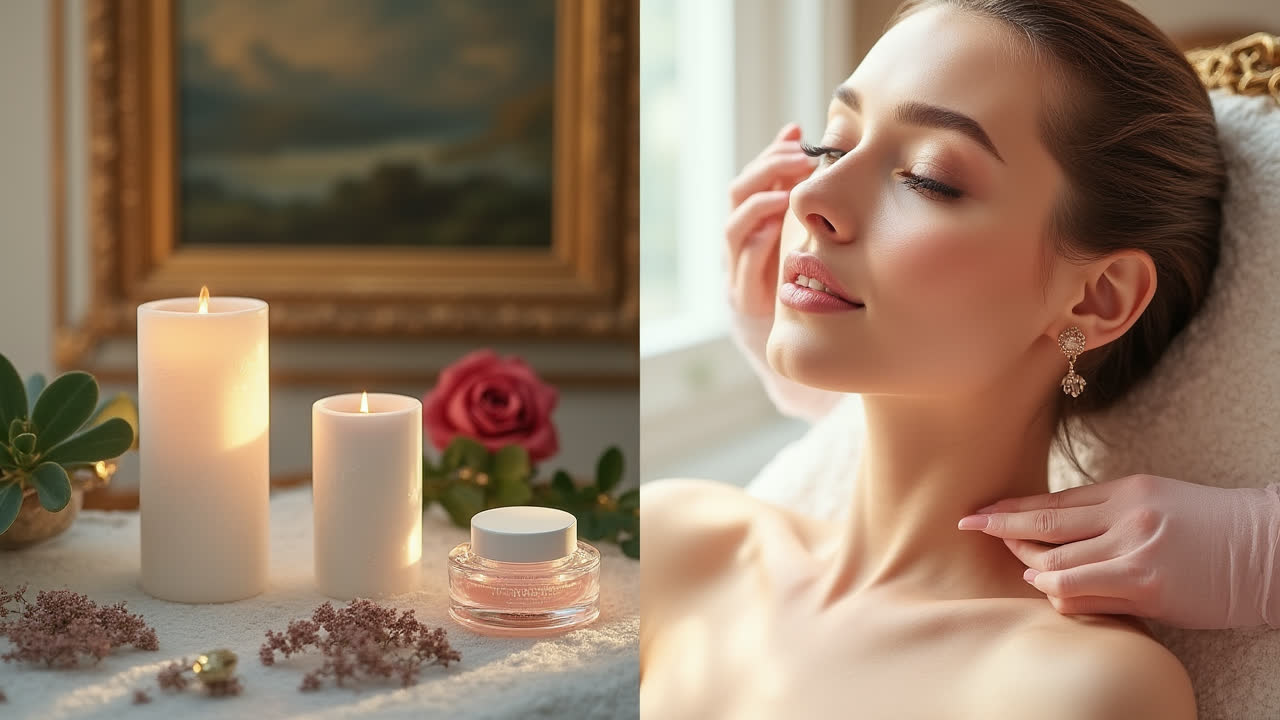
The beauty and cosmetic industry has thoroughly embraced these concepts, particularly in American contexts where "esthetics" and "esthetician" are common professional terms. Spas offer "esthetic treatments" that may include facials, manicures, and other beauty-enhancing procedures. Meanwhile, in European contexts, you're more likely to see "aesthetic medicine" or "aesthetic clinics" offering similar services. The core focus remains identical: enhancing perceived beauty through professional interventions.
In marketing and branding, companies invest heavily in creating cohesive aesthetic/esthetic identities. From logo design to packaging to retail environments, businesses understand that sensory appeal drives consumer behavior. Apple's product designs exemplify this approach – their aesthetic minimalism communicates values of simplicity and sophistication without requiring words. Even social media platforms like Instagram have built their success on enabling users to curate aesthetic experiences through carefully styled photographs and color themes.
Medical fields also incorporate aesthetic/esthetic considerations, particularly in reconstructive and cosmetic surgery. Procedures must balance functional outcomes with visual appearance. A surgeon might perform technically perfect work, but if the results don't meet the patient's aesthetic expectations, the outcome may still be considered unsatisfactory. This demonstrates how deeply these concepts influence our evaluation of success across various disciplines.
Cultural Variations in Aesthetic/Esthetic Appreciation
What we consider beautiful varies tremendously across cultures and throughout history. In Renaissance Europe, fuller figures were celebrated in art as symbols of prosperity and fertility, while contemporary Western beauty standards often favor slimmer silhouettes. Similarly, skin tone preferences shift dramatically between societies – some cultures traditionally value pale skin as a sign of refinement (not working outdoors), while others prize tanned skin as indicating health and leisure time.
Architecture provides another clear example of cultural aesthetic variation. Japanese aesthetic traditions value minimalism, asymmetry, and natural materials, embodied in concepts like "wabi-sabi" (finding beauty in imperfection). In stark contrast, Baroque European architecture embraced ornamentation, symmetry, and dramatic effects. Neither approach is inherently superior; they simply reflect different cultural values and historical contexts shaping aesthetic preferences.
Even within contemporary societies, aesthetic judgments vary significantly between subcultures and generations. What appears beautifully designed to a minimalist might seem sterile and uninspired to someone with maximalist sensibilities. Younger generations often reject the aesthetic preferences of their parents, only to find those same styles recycled as "vintage" or "retro" years later. These cycles of taste remind us that aesthetic judgments are rarely absolute but are instead deeply embedded in social and historical contexts.
Despite these variations, some aesthetic responses appear to transcend cultural boundaries. Research suggests certain landscape features, facial proportions, and musical patterns trigger broadly similar aesthetic responses across diverse populations. These commonalities hint at possible biological foundations for some aesthetic judgments, even as culture shapes and refines our specific tastes. The tension between universal and culturally specific aspects of aesthetic appreciation remains a fascinating area of ongoing study.
Philosophical Dimensions of Aesthetics/Esthetics
As a branch of philosophy, aesthetics/esthetics tackles fundamental questions about beauty and art. What makes something beautiful? Is beauty objective or entirely subjective? What distinguishes art from non-art? These questions have occupied philosophers for centuries and continue to generate lively debate. Immanuel Kant argued that aesthetic judgments involve "disinterested pleasure" – appreciation that doesn't depend on the object's usefulness or our personal desires.
Contemporary aesthetic philosophy has expanded beyond traditional concerns with beauty to examine a broader range of aesthetic qualities. Concepts like the sublime (overwhelming grandeur), the picturesque (charming irregularity), and even the grotesque (disturbingly strange) provide rich vocabulary for describing our aesthetic experiences. Some philosophers argue that aesthetic appreciation isn't limited to art or conventional beauty but can extend to natural environments, everyday objects, and even mathematical proofs.
The relationship between ethics and aesthetics presents another intriguing philosophical dimension. Can morally troubling works still have aesthetic merit? Should we evaluate art partly on ethical grounds? These questions gained renewed urgency in the 20th century as artists increasingly challenged social norms and ethical boundaries. While some argue for strict separation between aesthetic and moral judgments, others contend that ethical considerations inevitably inform our aesthetic responses. Perhaps most interesting are cases where aesthetic qualities and ethical qualities seem interwoven – where part of what makes something beautiful is its expression of moral goodness.
Professional Fields Specifically Using "Esthetics"
In American contexts, several professional fields have standardized around the "esthetics" spelling. The cosmetic industry represents the most prominent example, where "esthetician" designates a licensed professional specializing in skin care treatments. Estheticians typically complete specialized training programs and certification processes focusing on facials, waxing, makeup application, and other beauty treatments. The term appears in official licensing documentation and industry publications throughout the United States.
Dental practices in America frequently offer "dental esthetics" as a specialty focusing on the appearance of teeth and smiles. This field encompasses cosmetic procedures like teeth whitening, veneers, and other treatments designed to enhance smile aesthetics. The American Academy of Cosmetic Dentistry uses this spelling in its publications and certification materials, reinforcing the American English convention.
Medical aesthetics/esthetics represents another professional domain where the spelling variation appears consistently along regional lines. In the United States, providers might advertise "medical esthetics" services including Botox injections, dermal fillers, and laser treatments. The American Medical Spa Association and similar organizations standardize around this spelling in their American operations, while their international counterparts more commonly use "aesthetics."
FAQ About Aesthetics and Esthetics
Is there any difference in meaning between aesthetics and esthetics?
No, there is no difference in meaning between the two terms. Both "aesthetics" and "esthetics" refer to the same concept: the study or philosophy of beauty, taste, and sensory experiences. The only distinction is in regional spelling conventions, with "aesthetics" being used in British English and Commonwealth countries, while "esthetics" is the preferred spelling in American English. Both terms have identical etymological roots and are used in the same contexts, whether discussing philosophy, art criticism, or beauty treatments.
When should I use aesthetics instead of esthetics in my writing?
Your choice between "aesthetics" and "esthetics" should primarily depend on your target audience and publication standards. Use "aesthetics" when writing for British, Australian, Canadian, or other Commonwealth audiences, or when submitting to publications that follow British English conventions. Choose "esthetics" when writing for an American audience or publications that adhere to American English standards. If you're writing academic papers, check the preferred style guide of your institution or journal. For international contexts, "aesthetics" tends to be more widely recognized globally, but either spelling will be understood by most English readers.
How are aesthetics/esthetics applied in everyday life beyond art and philosophy?
Aesthetic/esthetic principles permeate everyday life in numerous ways. When you arrange furniture in your living room, select clothing based on how it looks, or choose a particular color scheme for your kitchen, you're making aesthetic decisions. Digital interfaces on websites and apps are designed with aesthetic considerations to enhance user experience. Product packaging, shop layouts, and urban planning all incorporate aesthetic principles to influence how people feel and behave in those environments. Even food presentation in restaurants and personal social media curation reflect aesthetic choices. These everyday applications demonstrate how aesthetic judgments extend far beyond formal art contexts to shape nearly every aspect of our designed environment and personal expression.
Conclusion: Choosing Between Aesthetics and Esthetics
When deciding whether to use "aesthetics" or "esthetics" in your writing or professional context, consider your primary audience and regional conventions. For international audiences, "aesthetics" often proves more widely recognized, though both forms communicate the same concept effectively. In academic or formal writing, consistency matters more than which spelling you choose – select one form and maintain it throughout your document.
The distinction between these terms represents a perfect example of how language evolves differently across regions while preserving core meanings. Far from being a significant conceptual difference, this spelling variation simply reflects the natural divergence of English as it adapted to different cultural contexts. Whether discussing the philosophical study of beauty, art criticism principles, or practical applications in design and beauty industries, both "aesthetics" and "esthetics" serve equally well.
What remains truly fascinating isn't the minor spelling difference but the rich conceptual territory these terms encompass. From ancient philosophical inquiries to contemporary digital design principles, aesthetic/esthetic considerations continue to shape how we create, perceive, and evaluate our world. The next time you find yourself appreciating the beauty of a sunset, the emotional impact of a piece of music, or the elegant design of an everyday object, remember you're engaging with the very experiences these twin terms were created to describe.